


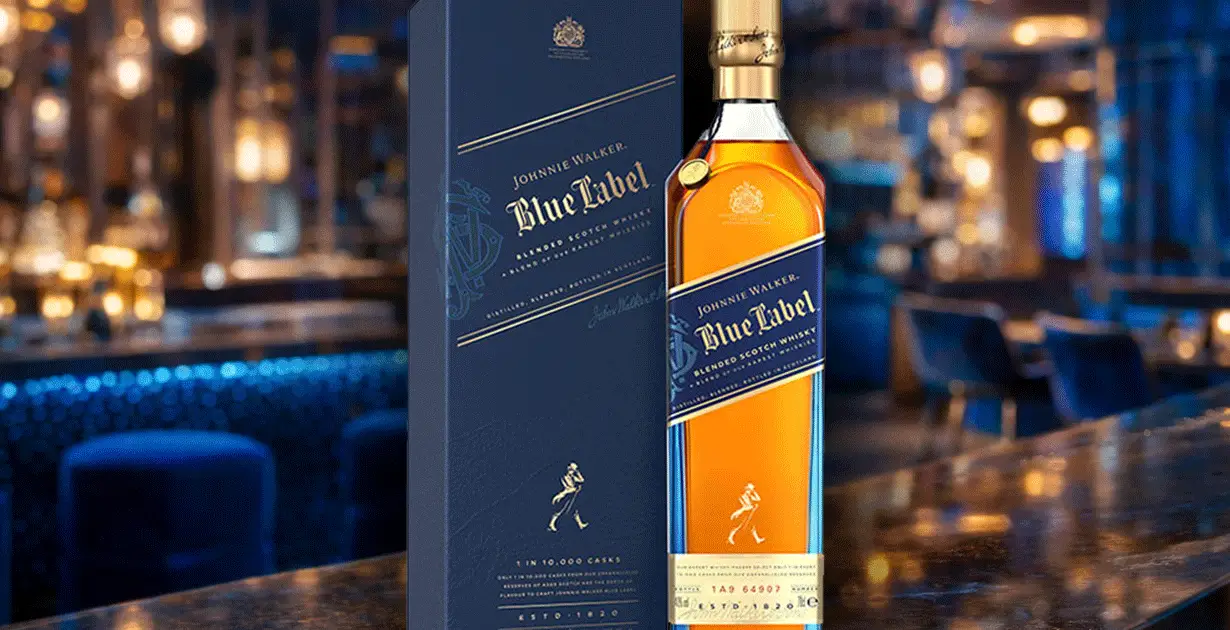
Johnnie Walker Blue Label carries a reputation that few whiskies can match.
It sits at the top of the core range from Johnnie Walker. It costs close to £200 a bottle in the UK. It is wrapped in deep blue glass and presented as the pinnacle of blending craft. For many people, it is the ultimate gift whisky.
But prestige and price are not the same as quality.
What Will Whisky Look Like in 2027? Voices from Whisky Live Paris
READ THE STORYSo how good is Johnnie Walker Blue Label, really? And more importantly, is it worth it?
This assessment looks beyond marketing. It examines major competition results, respected critic scores, and production claims. It also includes the perspective of whisky writer Phil Dwyer, who believes Blue Label is a good whisky, but questions whether the price makes sense for most drinkers.
Blue Label has won Gold medals at the San Francisco World Spirits Competition in multiple recent years and secured Gold at the International Wine & Spirit Competition. It has also received a 97-point score from Whisky Advocate.
 Trending Content
Those are serious credentials. The question is what they mean for you.
What Is Johnnie Walker Blue Label?
Johnnie Walker Blue Label was launched in 1992. It was originally introduced as “Johnnie Walker Oldest” in 1987 before being repositioned under the now familiar Blue Label name.
Today, Blue Label is positioned as the pinnacle expression of the Johnnie Walker core range, owned by Diageo.
It is bottled at 40% ABV. It carries no age statement. Instead, the brand emphasises selection. Official brand materials state that only one in 10,000 casks is chosen for Blue Label, including stock from so-called ghost distilleries.
In the UK, standard retail pricing typically sits between £170 and £220, depending on the retailer. By contrast, Black Label is widely available at around £30. That difference is not marginal. It defines the conversation.
Blue Label is not designed as an everyday bottle. It is designed to signal occasion, status, and celebration. Whether it delivers on that promise depends on how you define value.
How Good Is Johnnie Walker Blue Label?
Awards and Accolades
If you strip away branding and look only at competition results, Blue Label performs strongly.
At the San Francisco World Spirits Competition, Blue Label won Gold in 2022. It also appears among the Gold medallists in 2023 and 2024, according to the competition’s published results lists.
At the International Wine & Spirit Competition, Blue Label secured Gold in 2022. It received Silver in 2021, 2023 and 2024, based on the IWSC’s searchable results database.
At the World Whiskies Awards, Blue Label earned Gold in 2021 in the No Age Statement blended Scotch category.
Taken together, these results show consistency. Blue Label wins regularly. It performs at a high level year after year in blind tasting environments judged by industry panels.
What stands out is not dominance, but reliability. Blue Label does not sweep every category. It does not outclass every competitor every year. It sits near the top of the field, which is different from standing alone above it.
What Critics Say
Competition medals tell one part of the story. Critic reviews tell another.
Perhaps the most eye-catching score comes from Whisky Advocate, which awarded Johnnie Walker Blue Label 97 points. That places it firmly in elite territory on their 100-point scale. The review describes a whisky that is powerful yet controlled, with caramel sweetness, dried peat, cigar smoke, vanilla and spice woven together in a polished whole.
A 97-point score is not handed out lightly. It signals technical excellence in blending.
For context, the same publication awarded Johnnie Walker Black Label 88 points, praising its balance and calling it a benchmark blend at its price point.
Other respected reviewers offer a slightly cooler perspective. On WhiskyFun, Serge Valentin has described Blue Label as a very good blend with refinement and balance, while often stopping short of placing it among the very greatest whiskies he tastes. Scores tend to sit in the high 80s for modern bottlings.
Similarly, WhiskyNotes describes Blue Label as smooth and classy, with honeyed notes, almonds, toffee and gentle smoke, though at times slightly underpowered.
Blue Label is consistently described as balanced, smooth, and elegant, but it is rarely described as bold or thrilling. That distinction becomes important when we talk about value.
What Makes It Special?
Johnnie Walker does not position Blue Label around age. It positions it around selection.
On the brand’s official website, Blue Label is described as being created from just one in 10,000 casks, selected for their character and rarity. It also references the inclusion of whiskies from so-called ghost distilleries. That sounds impressive. And in many ways, it is.
Diageo has access to one of the largest reserves of maturing Scotch whisky in the world. That gives its blending team enormous flexibility. Blue Label is the result of that scale combined with precision.
But, Phil Dwyer makes a practical point here. Even if one in 10,000 casks is selected, Diageo’s scale means that still results in significant global volume. Blue Label is widely available. It is not scarce in the way limited single cask bottlings are scarce.
There are also many limited edition Blue Label releases where the packaging changes, but the liquid remains the same. That reinforces the idea that the core product is about consistency rather than rarity.
The special factor, then, is blending control. It is balance at scale.
Johnnie Walker Blue Label vs Black Label: Which Is Better?
For many drinkers, the real question is not whether Blue Label is good. It is whether it is better than Black Label in a way that justifies the price.
Let’s break that down.
Price
In the UK, Blue Label typically retails between £170 and £220. Black Label is widely available for around £30.
For the price of one bottle of Blue Label, you could buy several bottles of Black Label and still have change left over.
Awards
As mentioned above, Blue Label has secured repeated Gold medals at various competitions. But Black Label is no underdog.
Black Label won Double Gold at the 2020 San Francisco World Spirits Competition. It secured Gold at SFWSC again in 2022 and 2024, and Silver in 2023. At the International Spirits Challenge, it won Gold in 2020, 2021, 2023 and 2024. At the IWSC, it earned Silver in 2021, 2023 and 2024, and Gold in 2022.
Black Label does not rely on one headline win. It wins steadily across multiple competitions and across multiple years.
Flavor Profile
Blue Label is smooth, layered and refined. Honey, vanilla and soft smoke tend to define the experience. It is seamless from nose to finish.
Black Label is more direct. It has clearer peat definition, more obvious structure and a slightly firmer edge.
Phil Dwyer is unequivocal here: “When it comes to Black Label over Blue Label, easy choice and go for Black Label. Yes, it has a screw top. Yes, it’s only £30 a bottle. Yes, it’s not as ‘rare’, but, at the end of the day, it tastes better.”
Is Johnnie Walker Blue Label Worth It?
Two conclusions can sit side by side here.
First, Johnnie Walker Blue Label is undeniably good.
Its medal record at international competitions and its place amongst reviewers places it in elite company.
Blue Label is technically accomplished. It is polished. It is seamless.
The harder question is whether it justifies its price.
Phil Dwyer does not question the quality of the liquid. He questions the value proposition.
“It tastes good and I believe every whisky drinker should try it and make up their own minds about taste versus price, but in the current world, you can do so much better.”
At around £200, Blue Label competes with 18 to 25 year old single malts, independent bottlings, and cask strength releases with strong distillery character.
Phil puts it bluntly: “Balance is great, but in the case of Johnnie Walker Blue, it can sometimes come across as a little boring. Prestige often is these days.”
For gifting, Blue Label makes strong sense. It looks impressive. It carries global recognition. It signals celebration.
For personal drinking, especially for enthusiasts who enjoy defined character and intensity, the equation becomes less straightforward.
Blue Label is not hype without substance. It is a high-quality blend. But it is also a prestige product.
Whether it is worth it depends on whether you value refinement above all else, or whether you prefer personality and punch for the same money.