Jameson is the world’s best-selling Irish whiskey. More than 8 million cases are sold every year across 130 countries. The green bottle is a barroom classic, but the story behind it is far richer than most people realize.
From a Scottish founder who built a distilling empire in Dublin to a family motto earned fighting pirates, Jameson is full of surprises. It is also a brand that continues to innovate, from beer-barrel experiments to award-winning visitor experiences.
Here are seven things you may not know about Jameson Irish Whiskey. They show why it remains one of the most important and enduring names in the whiskey world. There is also an FAQ section at the end, for curious drinkers new to Jameson.
1. Jameson’s Founder Was Actually Scottish

Jameson is often described as the most Irish of whiskeys, yet its founder was born in Scotland. John Jameson came from Alloa, a town near Stirling, and moved to Dublin in 1780. There, he took charge of the Bow Street Distillery, which had been established a few years earlier.
Under his leadership, the distillery grew rapidly and became one of the largest whiskey producers in the world by the 19th century. What began with a Scottish lawyer’s ambition turned into Ireland’s most famous whiskey, still thriving more than 240 years later.
2. The Motto Comes from Battling Pirates
Every bottle of Jameson carries the family motto Sine Metu, which means “Without Fear” in Latin. The Jamesons were granted this motto in the 1500s after showing courage at sea. According to historical accounts, the family fought off pirates while protecting trade ships.
It became part of the Jameson crest and later the whiskey label. Today, it stands as a reminder that the brand’s roots are tied to boldness, risk-taking, and resilience.
3. Triple Distilled for Extra Smoothness
Jameson is famous for its smooth character. That comes from a tradition of triple distillation that John Jameson established in the 18th century. Most whiskeys are distilled twice. Jameson (like most Irish whiskeys) adds a third pass through the stills, which results in a lighter and silkier spirit.
The whiskey is a blend of pot still and grain whiskey. Pot still whiskey is made from a mix of malted and unmalted barley, while the grain whiskey is distilled from maize. Together, they create a balanced profile with notes of vanilla, spice, and gentle sweetness for which Jameson is renowned.
4. The Beer Experiment That Changed Everything
One of Jameson’s most popular modern releases began with a conversation in a pub. In 2013, a Jameson distiller and the head brewer of Franciscan Well Brewery in Cork agreed to swap barrels. The brewer aged a stout in Jameson casks. Jameson then used those stout-seasoned barrels to finish whiskey.

The result was Jameson Caskmates Stout Edition, which carried flavors of chocolate, coffee, and hops. It was such a hit that Jameson expanded the idea with the Caskmates IPA Edition. What started as an experiment became a permanent part of the lineup.
5. From Casks to Bottles – A Late Change
For most of its history, Jameson did not bottle its own whiskey. Whilst there was a bottling operation for export markets in London under the Jameson name, in Ireland, the whiskey was sold by the cask to bottlers.
Merchants and publicans would then bottle it under their own labels. That meant a bottle of Jameson could look very different depending on where it was bought.
This changed in 1963 when Jameson released Crested, initially known as Jameson Ten. It marked the start of in-house bottling and gave the distillery full control of quality from grain to glass.
6. Jameson Helped Inspire Wireless Radio
The Jameson family history stretches beyond whiskey. John Jameson’s great-grandson was Guglielmo Marconi, the Nobel Prize–winning inventor of wireless telegraphy. Marconi’s mother, Annie Jameson, was the granddaughter of the distillery founder.
This connection ties Jameson to one of the most important technological advances of the 20th century. While the whiskey was shaping Irish identity abroad, a member of the same family was helping to shape modern communication. It is a surprising link between a Dublin distillery and the birth of radio.
7. Jameson’s Old Home Is Now an Award-Winning Attraction

The Bow Street Distillery in Dublin was Jameson’s home for nearly 200 years. It closed in 1970 when production moved to Midleton in County Cork. The old site was left to decline and even suffered a fire in 1990.
In 1997, it reopened as the Jameson Distillery Bow St. visitor center. After major refurbishments, it became one of Dublin’s leading attractions. In 2018, it was named the World’s Leading Distillery Tour at the World Travel Awards. Today, it welcomes thousands of visitors each year.
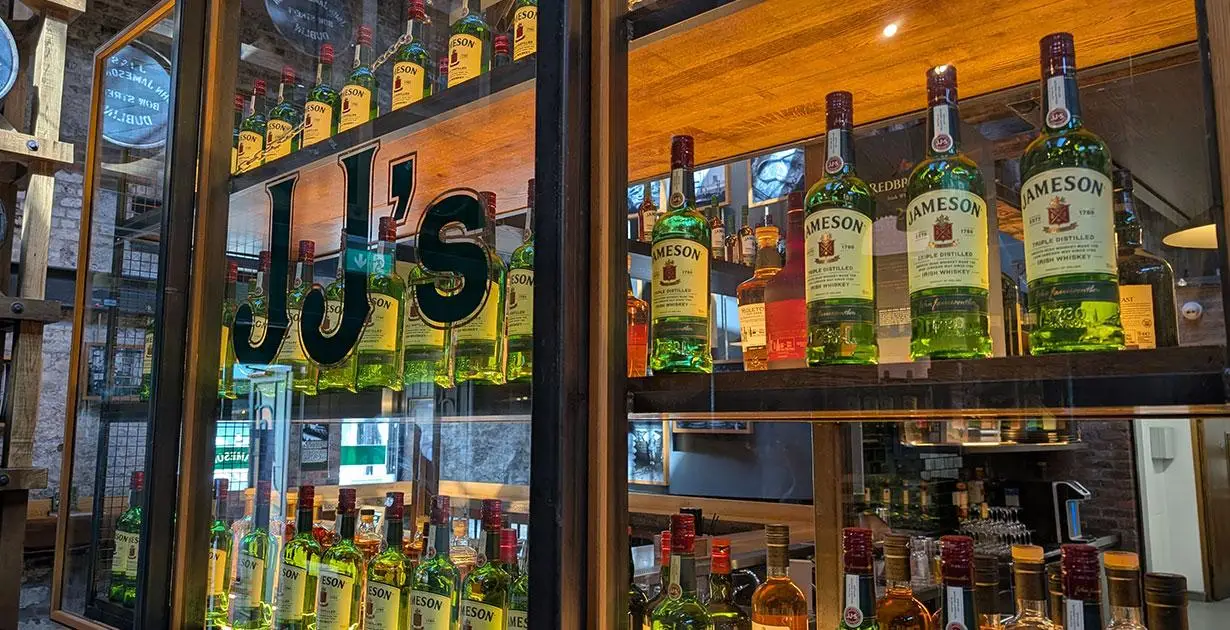
I was fortunate enough to visit Jameson Bow Street Distillery in May this year, to take a closer look at the rich history of the inner city distillery. I would highly recommend a visit if you ever find yourself in Dublin. Our enthusiastic and knowledgeable tour guide was Daisy. Do say hi to her for me if you are lucky enough to have her as your guide!
Jameson Irish Whiskey FAQ
Why is Jameson whiskey so good?
Jameson is known for its smooth taste. This comes from triple distillation and a blend of pot still and grain whiskey. The use of seasoned oak casks adds layers of vanilla, spice, and gentle sweetness, making it approachable for new and experienced whiskey drinkers alike.
What is Jameson whiskey?
Jameson is an Irish blended whiskey. It combines pot still whiskey, made from malted and unmalted barley, with lighter grain whiskey. It must be aged at least three years in Ireland, though Jameson often matures longer.
Is Jameson smoother than bourbon?
Jameson is usually lighter and smoother than bourbon. This is because it is triple distilled, while most bourbon is distilled twice. Bourbon also has a sweeter, heavier profile from new charred oak barrels, while Jameson is more delicate.
Is Jameson good to drink straight?
Yes. Jameson Original is mellow enough to enjoy neat or on the rocks. Its smoothness also makes it versatile for cocktails such as a whiskey sour or with ginger ale.
Is Jameson whiskey like Jack Daniel’s?
No. Jack Daniel’s is a Tennessee whiskey made mainly from corn and aged in new oak barrels, giving it a sweeter profile. Jameson is an Irish blend , triple distilled, and aged in used bourbon and sherry casks.
Is scotch whisky the same as Irish whiskey?
No. Apart from being made in Ireland, Irish whiskey is usually triple distilled and often blends pot still and grain whiskey. Scotch whisky is generally distilled twice and uses malted barley as its base (however, there are different styles such as single malt, and single grain). Scotch also has regional styles, with some heavily peated.
Where is Jameson Irish Whiskey made?
All Jameson is produced at Midleton Distillery in County Cork, Ireland. The site has been its home since 1975.