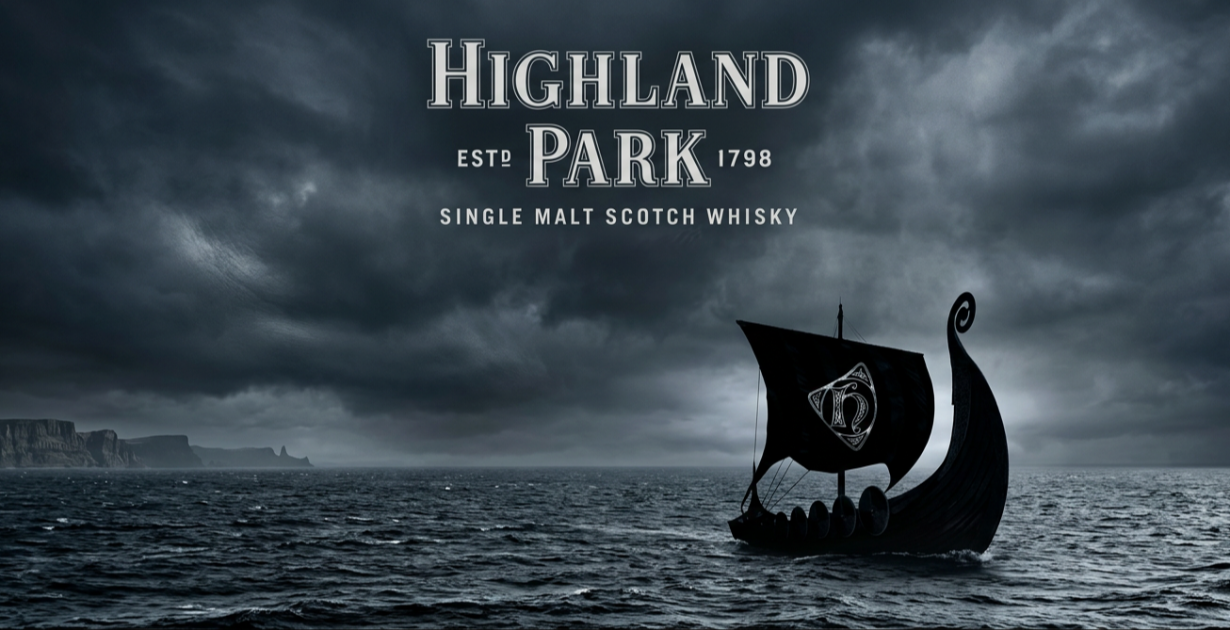
Few Scotch whisky distilleries possess quite the same combination of history, character and sense of place as Highland Park. Situated in Kirkwall, on the windswept Orkney Islands, this celebrated distillery has been associated with whisky-making since 1798, earning a reputation for producing a distinctive single malt shaped by its remote island home.
Highland Park’s journey has taken it from the shadowy world of illicit distilling to international recognition, with centuries of tradition, Norse heritage and time-honoured production techniques contributing to its enduring appeal.
Beyond its familiar core range lies another fascinating world: vintage releases, independent bottlings and exceptionally rare single casks that capture Highland Park spirit from some of the most celebrated decades in whisky history.
What Will Whisky Look Like in 2027? Voices from Whisky Live Paris
READ THE STORYAt The Whisky Vault, we’re taking a closer look at the distillery’s remarkable past before exploring a selection of extraordinary bottles that showcase its legacy.
The Legend of Magnus Eunson: Highland Park’s Infamous Beginnings
To uncover the origins of Highland Park, we must travel back to the late eighteenth century, when producing whisky without official permission was far from unusual.
Heavy taxation and strict regulations encouraged enterprising Scots to distil spirits away from the watchful eyes of the excise authorities. The remote Orkney Islands provided an ideal setting for such activities, and one local character would become permanently associated with Highland Park’s early history.
 Trending Content

His name was Magnus “Mansie” Eunson.
A church beadle by profession, Eunson is widely remembered in Highland Park folklore as a man with a rather unconventional second occupation: illicit whisky production and smuggling.
According to the stories, his respectable position within the community provided the perfect cover for his less legitimate activities. One particularly memorable tale claims that he concealed contraband whisky beneath a church pulpit, keeping his illicit operation hidden in a place where the authorities would be unlikely to search.
Whether every detail of these colourful accounts can be verified remains uncertain, but Eunson’s reputation has become an enduring part of the distillery’s identity.
Highland Park traditionally traces its beginnings to 1798, linking its foundation to Eunson and the early whisky-making activities associated with the site.
From Smuggling to Legitimacy: The Birth of a Licensed Distillery
Although its origins are steeped in local legend, Highland Park’s subsequent development marked a transition towards legitimate commercial whisky production.
As the nineteenth century progressed, the distillery became established as a recognised operation, with historical accounts connecting members of the Robertson family and other local figures to its early ownership.
A major milestone arrived in 1826, when Highland Park received its official distilling licence.
This date is particularly significant because, although 1798 remains the traditional founding year, the granting of a licence represented a separate step in the distillery’s evolution from its legendary beginnings into the regulated Scotch whisky industry.
From there, Highland Park continued to develop, gradually building its reputation beyond Orkney and establishing the foundations for the internationally respected name we recognise today.
The Nineteenth Century: Highland Park Finds Its Feet
The nineteenth century brought considerable change to Scotland’s whisky industry, and Highland Park was well placed to benefit as demand for Scotch continued to develop.
Under successive owners, the distillery evolved from a relatively isolated island operation into a business with increasingly wider commercial ambitions.
One of the most important developments came in 1895, when James Grant, known for his association with The Glenlivet, acquired Highland Park.
The period surrounding the turn of the twentieth century saw further investment and expansion, including an increase in the distillery’s still capacity.
These developments helped strengthen Highland Park’s position within the industry. Its location may have been remote, but the whisky it produced was becoming increasingly important to the wider Scotch trade.
At the time, much malt whisky was destined for blending rather than being sold under individual distillery labels. Highland Park’s spirit therefore played a role in the broader world of Scotch blends, contributing its own character to carefully constructed recipes.
Its distinctive identity, however, would eventually help it step out from behind the blend and gain recognition as a single malt in its own right.
The Twentieth Century: From Blending Malt to Single Malt Favourite
For generations, Highland Park whisky was valued in the blending trade, as was the case with many malt distilleries before single malt Scotch became a major category in its own right.
The twentieth century brought its fair share of challenges, from economic uncertainty to changing ownership and shifting consumer preferences.
In 1937, Highland Park became part of Highland Distillers, placing the distillery within a larger whisky business with interests across Scotland.
Despite these changes, Highland Park retained the qualities that made its spirit distinctive. Its Orcadian setting and traditional production practices continued to contribute to a character that stood apart from many mainland malts.
By the late 1970s, single malt whisky was attracting greater attention from drinkers who wanted to explore individual distilleries rather than simply enjoy blended Scotch.
Highland Park was well positioned to take advantage of this growing interest. Its combination of gentle smoke, sweetness, spice and oak offered a balanced alternative to more intensely peated styles.
1999: Highland Park Enters a New Era with Edrington
Another defining moment arrived in 1999, when Highland Distillers became part of the Edrington Group.
The acquisition brought Highland Park into a business with extensive experience in the Scotch whisky industry and a portfolio of established brands.
In the years that followed, Highland Park placed increasing emphasis on its own identity, drawing inspiration from Orkney’s remarkable cultural heritage.
The islands’ Norse connections provided a particularly rich source of inspiration. Viking history, mythology and ancient legends became prominent features of the brand’s visual identity and limited-edition releases.
This approach gave Highland Park a distinctive personality in an increasingly competitive single malt market.
Yet beneath the striking packaging and stories of Norse gods and warriors remained the same essential attraction: a whisky whose character was shaped by its island home and the traditions of its distillery.
Legends from The Whisky Vault: Exceptional Highland Park Bottlings
With more than two centuries of history behind it, Highland Park has produced some remarkable whisky. For collectors, however, the real fascination often lies in vintage releases and independent bottlings that preserve the character of spirit distilled decades ago.
From classic dumpy bottles to rare sherry casks and highly limited commemorative releases, the following selection offers a glimpse into the extraordinary world of Highland Park collectables:
Highland Park 1959 21 Year Old — James Grant 1980 Dumpy Bottling
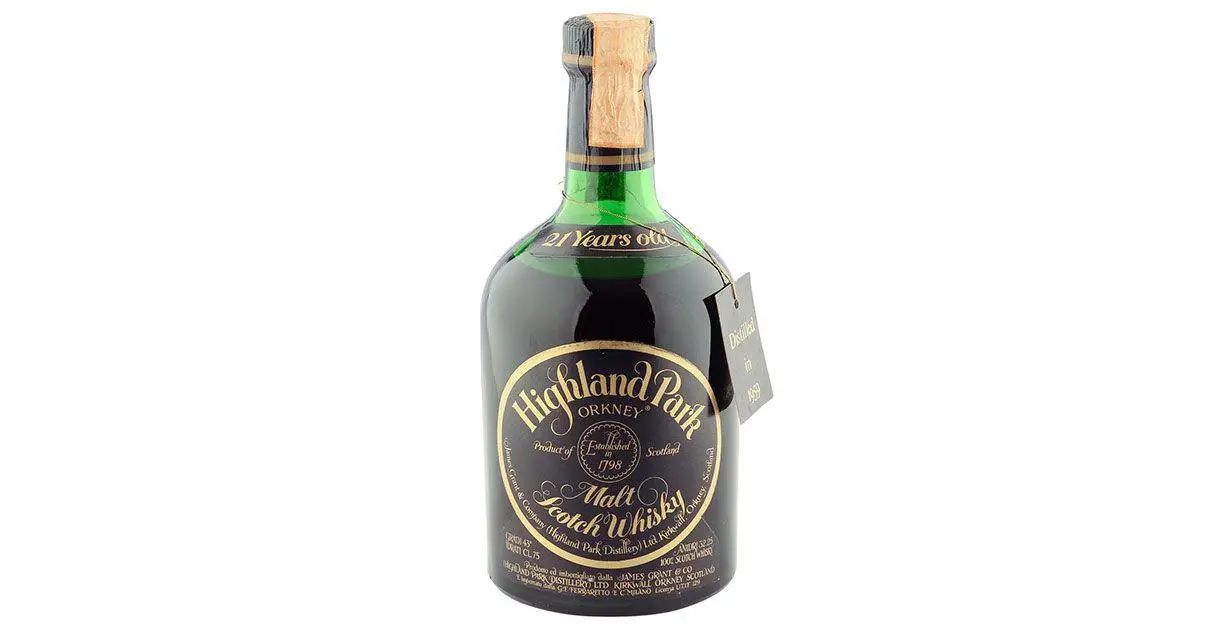
The first entry is a true vintage treasure: an exceptionally rare Highland Park distilled in 1959 and bottled in 1980 by James Grant & Co.
Matured for 21 years, this classic old-style dumpy bottling was imported into Italy by Ferraretto of Milan. Its impressive reputation among enthusiasts is reflected in its 95-point score from WhiskyFun, making it a particularly noteworthy release for collectors of historic Highland Park.
The Whisky Vault price: net £3,333.33 ($4,437.98, ₹4,21,277)
Highland Park 1961 16 Year Old — Cadenhead’s 1977 Dumpy Bottling
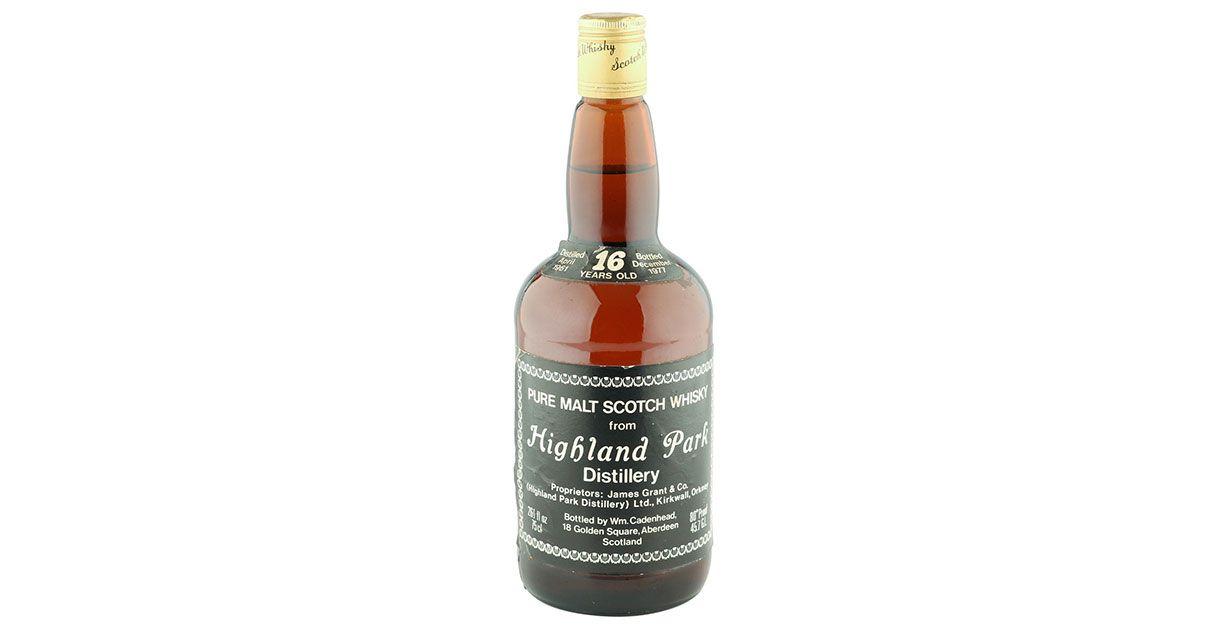
Distilled in April 1961 and bottled in December 1977, this Highland Park 16 Year Old represents another fascinating piece of the distillery’s vintage history.
Released by the respected independent bottler Wm Cadenhead at 80 proof, it comes in the distinctive dumpy bottle format that has become so recognisable among collectors of older Scotch whisky.
Its appeal lies not only in the age of the spirit but also in its connection to an earlier era of independent bottling, when individual releases offered enthusiasts a different perspective on established distilleries.
The Whisky Vault price: net £3,333.33 ($4,437.98, ₹4,21,277)
Highland Park 1961 36 Year Old — The Dragon, 1997 Bottling

Few Highland Park releases capture the distillery’s character and heritage quite like The Dragon.
Distilled in 1961, this single malt matured for 36 years in sherry cask number 4493 before being bottled in 1997 by S & JD Robertson Group Ltd of Orkney.
With just 216 bottles produced, it is an exceptionally limited release, and its reported 91-point WhiskyFun score adds to its appeal among vintage whisky enthusiasts.
The name itself draws inspiration from Orkney’s Norse heritage. The Dragon references a twelfth-century carving associated with Norse Crusaders at Maeshowe, the remarkable prehistoric chambered tomb dating to approximately 3000 BC.
This bottling brings together three elements that make Highland Park so compelling: mature island spirit, sherry-cask influence and the history of Orkney itself.
The Whisky Vault price: net £2,500 ($3,328.49, ₹3,15,958)
Highland Park 1962 35 Year Old — John Goodwin Retirement Bottling, 1997

Created to mark the retirement of company chairman John Goodwin, this rare Highland Park release carries a personal story alongside its impressive age.
Distilled in 1962, the whisky spent 35 years maturing before being bottled in October 1997, shortly before Goodwin’s retirement. The 35-year maturation period also reflected the length of his service with the company.
Bottled at a natural cask strength of 50% ABV, this commemorative release was limited to just 300 bottles.
Its combination of mature Highland Park spirit, a meaningful occasion and a restricted production run makes it a particularly interesting piece of distillery history.
The 94-point WhiskyFun score further underlines its standing among enthusiasts of old and collectible single malts.
The Whisky Vault price: net £4,583.33 ($6,102.22, ₹5,79,256)
Highland Park 1965 37 Year Old — John Scott’s 2003 Bottling
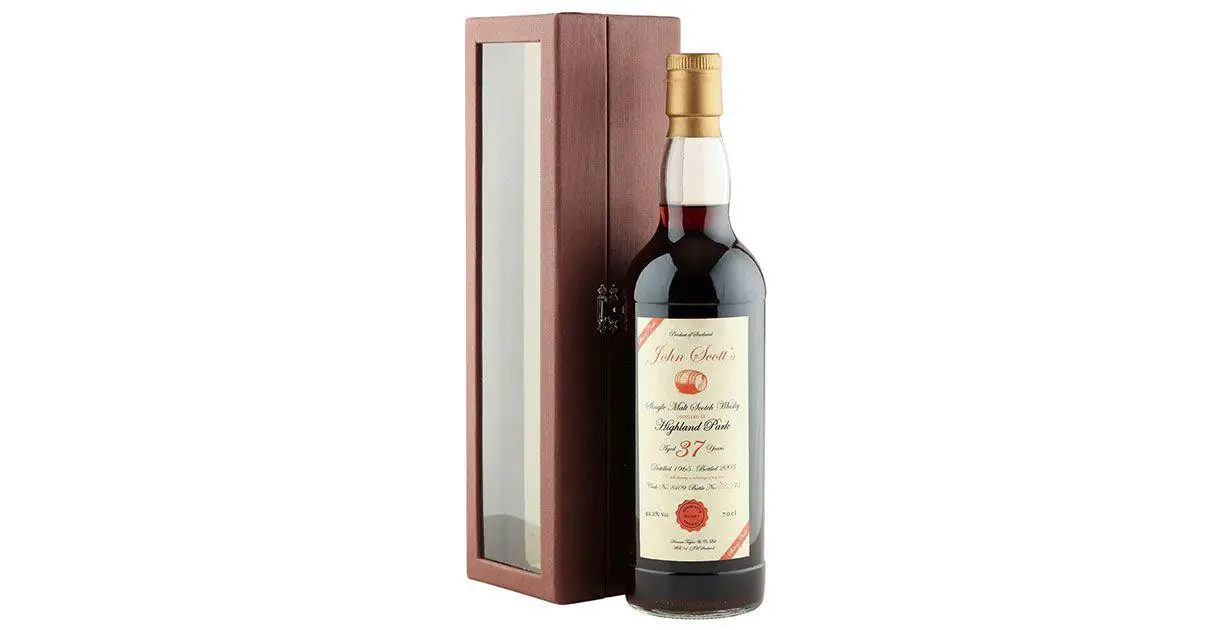
This extraordinary 37-year-old Highland Park was distilled in 1965 and bottled in 2003 for John Scott & Miller Ltd under its John Scott’s label.
Its background is particularly interesting for collectors. The release belongs to a group of just 12 single casks laid down during the 1960s by Robert Firth Miller, the former proprietor of John Scott & Miller Ltd.
The John Scott name also has historical significance: it was the original name of the business and appeared on shop bottlings of Highland Park until 1955.
Drawn from sherry cask number 8409, the whisky was bottled at a natural strength of 42.2% ABV. Just 75 bottles were produced in conjunction with Duncan Taylor & Co. Ltd.
A combination of extended maturation, sherry-cask character and a fascinating independent-bottling history makes this a particularly compelling addition to the Highland Park archive.
The Whisky Vault price: net £4,166.67 ($5,547.48, ₹5,26,598)
Highland Park 1966 — Berry Bros. & Rudd, 1979 Bottling

Bottled by the historic wine and spirits merchant Berry Bros. & Rudd in 1979, this vintage Highland Park offers another glimpse into an earlier chapter of Scotch whisky.
The spirit was distilled in 1966 and released in a traditional format containing 26⅔ fluid ounces at 75 proof.
Its 93-point WhiskyFun score makes it a noteworthy bottling for those interested in the older independent releases that helped build Highland Park’s reputation among collectors.
Bottlings of this era are particularly appealing because they preserve not only the whisky itself but also the presentation and conventions of an earlier period in Scotch whisky history.
The Whisky Vault price: net £4,166.67 ($5,547.48, ₹5,26,598)
Highland Park 1968 27 Year Old — Hart Brothers Finest Collection
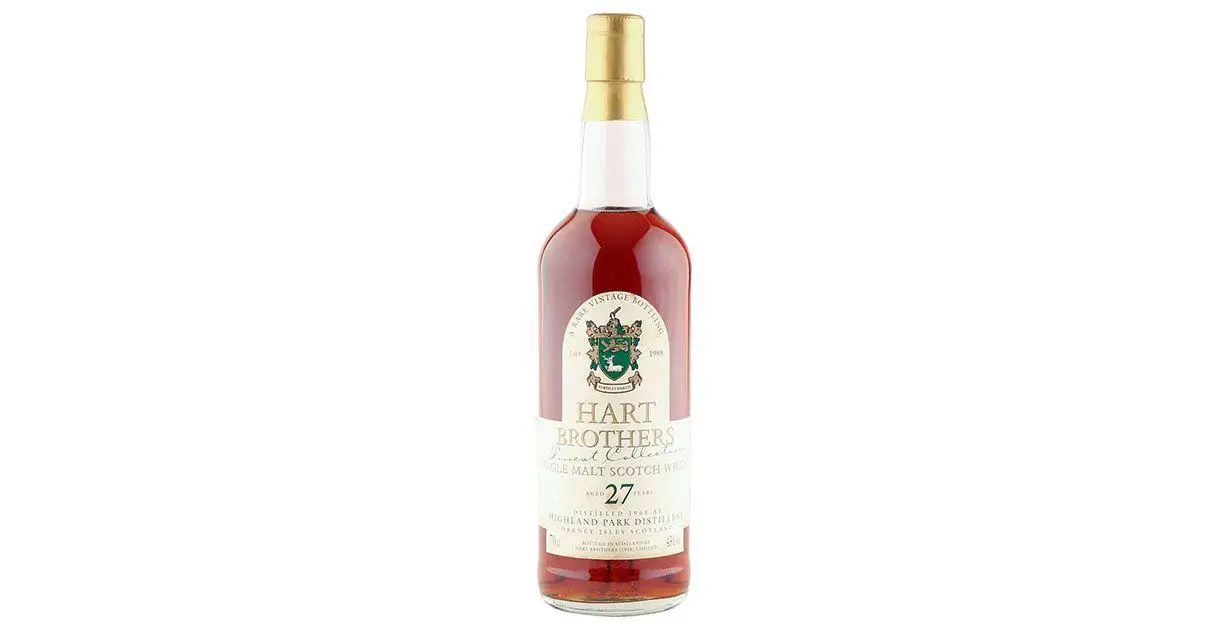
Distilled in 1968 and bottled in the mid-1990s, this 27-year-old Highland Park formed part of the Hart Brothers Finest Collection.
Originally imported for the Portuguese market, the release has attracted attention from collectors for its age, provenance and reported 93-point score from WhiskyFun.
Independent bottlings such as this offer an alternative way to explore the character of Highland Park, with individual casks and maturation histories providing a perspective beyond the distillery’s standard releases.
For enthusiasts of vintage Orkney whisky, it represents an intriguing example of the distillery’s spirit after more than a quarter-century in oak.
The Whisky Vault price: net £1,208.33 ($1,608.76, ₹1,52,713)
Highland Park 1970 30 Year Old — SMWS 4.73

Bottled for The Scotch Malt Whisky Society in June 2000, this 30-year-old Highland Park was distilled in March 1970 and matured in a single Society cask.
Released at a natural strength of 52.5% ABV, it is described on its label as “As good as it gets” — a bold endorsement for a whisky that had spent three decades developing its character.
The dark sherry influence associated with this bottling makes it particularly appealing to enthusiasts who appreciate richer, more concentrated styles of mature single malt.
Its single-cask origin also adds to its individuality, offering a snapshot of Highland Park that cannot necessarily be replicated in another release.
The Whisky Vault price: net £2,916.67 ($3,883.24, ₹3,68,618)
Highland Park 1976 18 Year Old — Cadenhead’s 1994 Oddbins Cask 4646

Distilled in September 1976, this Highland Park matured for 18 years before being bottled by Wm Cadenhead in October 1994, specifically for the wine and spirits retailer Oddbins.
Drawn from single cask number 4646, it was released at a natural strength of 59% ABV.
The bottling reportedly achieved an impressive 94 points from WhiskyFun and has remained a sought-after release among enthusiasts of independent Highland Park bottlings.
Its combination of cask-specific character, substantial bottling strength and a direct connection to a notable British retailer makes it an especially interesting example of the vintage whisky trade.
The Whisky Vault price: net £3,333.33 ($4,437.98, ₹4,21,277)
Highland Park 20 Year Old — John Rebus 20th Anniversary Edition

Not every collectible Highland Park release is defined solely by its age or maturation history. Some have an equally compelling cultural connection.
This special 20-year-old single cask was bottled in 2007 to celebrate the twentieth anniversary of Inspector John Rebus, the celebrated detective created by Scottish crime novelist Ian Rankin.
Just 150 bottles were drawn from cask number 3272, which Rankin personally selected during a visit to the distillery. The bottles were then given to the author to distribute as he saw fit, with a number reportedly benefiting charitable causes and auctions.
This particular example comes with a distinctive oak presentation case signed by Rankin and identified as bottle number one. According to information supplied by the original owner, the signature was obtained at an exclusive London event in 2007, marking it as the first bottle released by the author.
The combination of Highland Park single-cask whisky, literary heritage and an unusually significant presentation makes this a standout collectible for whisky lovers and John Rebus enthusiasts alike.
The Whisky Vault price: net £3,333.33 ($4,437.98, ₹4,21,277)
Highland Park Distillery: A Timeline of Key Milestones
The distillery’s history spans more than two centuries. Here are some of the principal dates associated with its development.
- 1798: The traditional founding date of Highland Park, originally associated with the name High Park and Magnus Eunson.
- 1816: Excise officer John Robertson is associated with taking control of the High Park estate.
- 1826: Highland Park receives its official distilling licence.
- 1876: Under Stuart & Mackay, the distillery expands its commercial reach, with global exports reported to begin.
- 1895: James Grant acquires Highland Park.
- 1918: The distillery enters a prolonged period of inactivity following the First World War.
- 1937: Highland Distillers acquires the distillery and production resumes.
- 1979: Highland Park’s official 12-year-old single malt is released, helping establish the brand in the emerging single malt market.
- 1986: The distillery opens its visitor centre to the public.
- 1999: Edrington acquires Highland Distillers, bringing Highland Park into its portfolio.
- 2023: Highland Park celebrates its 225th anniversary with the release of a 54-year-old whisky.
A Legacy of Orkney, Norse Heritage and Whisky-Making Tradition
Highland Park’s enduring appeal comes from far more than its age or its reputation among collectors.
Its story begins with the traditions and colourful legends of eighteenth-century Orkney, develops through the growth of the Scotch whisky trade, and continues into an era when single malts have become prized by enthusiasts around the world.
The distillery’s island setting remains central to its identity. Its traditional production methods, distinctive use of peat and connection to Orkney’s Norse heritage all contribute to a whisky that has developed a character of its own.
For collectors, vintage Highland Park bottlings offer an additional dimension: the opportunity to explore spirit distilled decades ago, presented through historic labels, independent bottlers, single casks and commemorative releases.
From the classic James Grant dumpies of the early 1980s to rare sherry-cask bottlings and limited editions with fascinating stories behind them, these bottles are tangible reminders of the distillery’s remarkable journey.
Highland Park has travelled a long way from the illicit whisky legends associated with Magnus Eunson. Yet the sense of individuality that runs through those early stories remains part of its appeal.
More than 200 years on, Orkney’s celebrated distillery continues to capture the imagination — one distinctive dram at a time.
Slàinte mhath!