

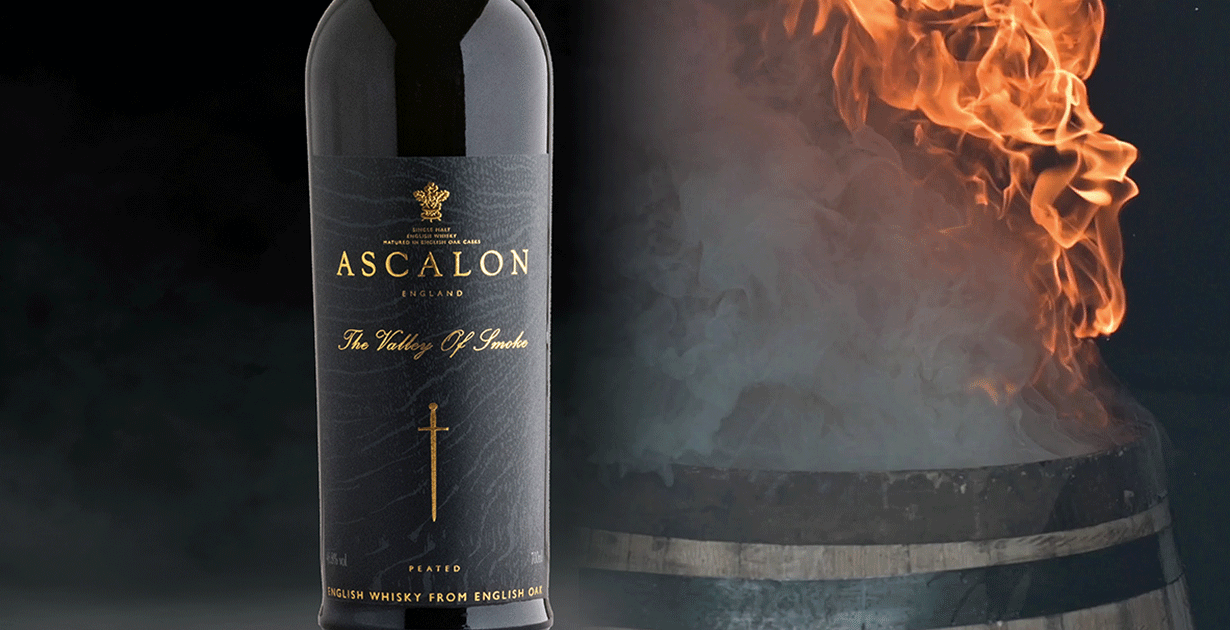
It is said that up to 80% of a whisky’s flavour comes from its cask — so the quality of the casks matters. As an English single malt producer we believe sourcing the best casks possible is essential, which is why we mature all our Ascalon whiskies in casks made from sustainably harvested English oak.
Whiskies were not always matured in wood. For many centuries, these grain-based spirits were drunk unaged. The practice of ageing whisky emerged at the height of Britain’s maritime trade in the 18th and 19th centuries, when wooden casks were used for transporting all kinds of products, including spirits. This short resting period was found to have a positive effect on the flavour of grain spirits — and there, a tradition was born.
While a new-make spirit ages in a cask, several reactions are taking place between wood and spirit that will have a substantial effect on its colour, flavour, texture and alcoholic strength. In this sense, a cask’s impact on a whisky is truly transformative. It’s for this reason that we put such care into the creation of our English oak casks.
Here, we’ll explore what happens to a spirit inside a cask and its journey to becoming a whisky.
Why We Mature Whisky In Oak Casks
Oak is by far the most common wood used for whisky maturation. It is a dense, hard wood with a tight grain, which makes it watertight, but it is also flexible, meaning staves cut from it can be bent and shaped. It still takes an experienced cooper to make high-quality casks — we source ours from England’s last remaining cooperage.
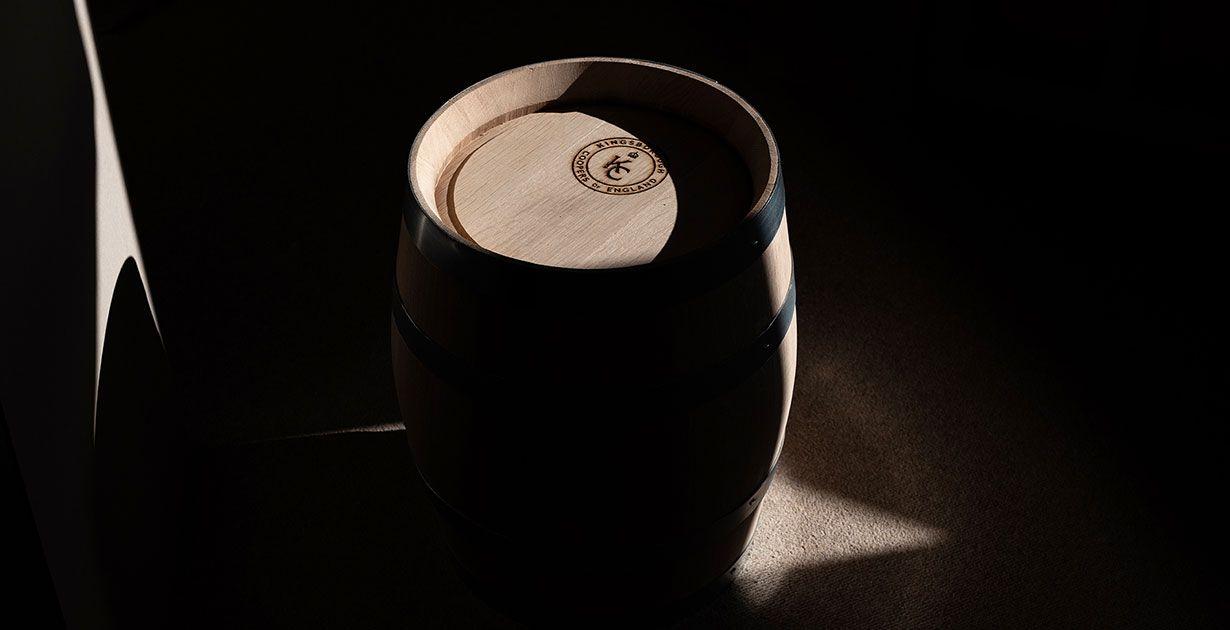
Oak is not only well structured for maturation but well flavoured, too. It contains several chemical compounds which contribute favourably to a whisky. These include vanillin (vanilla notes), lactones (coconut and creamy notes), eugenol (clove spice), and furfural (nutty, grainy notes).
Numerous varieties of oak are used for whisky maturation, with the most common being American and European oak. For our whiskies, we elected to use English oak, something seldom seen even among English whisky makers. While technically the same species as European oak (Quercus robur), the growing conditions in England have subtle impacts of the wood that we feel go toward making better casks. As an English whisky producer, using locally grown oak also lends greater provenance to our whiskies and helps us reduce our environmental impact.
Toasting and Charring: The Benefit of Heat
Oak’s full aromatic potential is hidden under its surface. Fortunately, this can be accessed easily by turning up the heat. During the coopering process, a cask’s staves are toasted and charred. This breaks down the surface of the wood to make aromatic compounds and wood sugars more readily accessible, helping the new-make spirit absorb them while it matures.
Whisky makers can precisely tailor the levels of toasting and charring to help produce different profiles in their whiskies. At Ascalon, we toast our casks at a moderate heat (180–220°C) for 15–45 minutes. This activates flavour compounds such as hemicellulose, which brings toffee, caramel and sweet toasted notes, and lignins such as vanillin, eugenol and guaiacol (smoke notes). The intensity of the toast — light, medium or heavy — also affects the oak’s tannins, which contribute structure, colour and complexity during ageing.
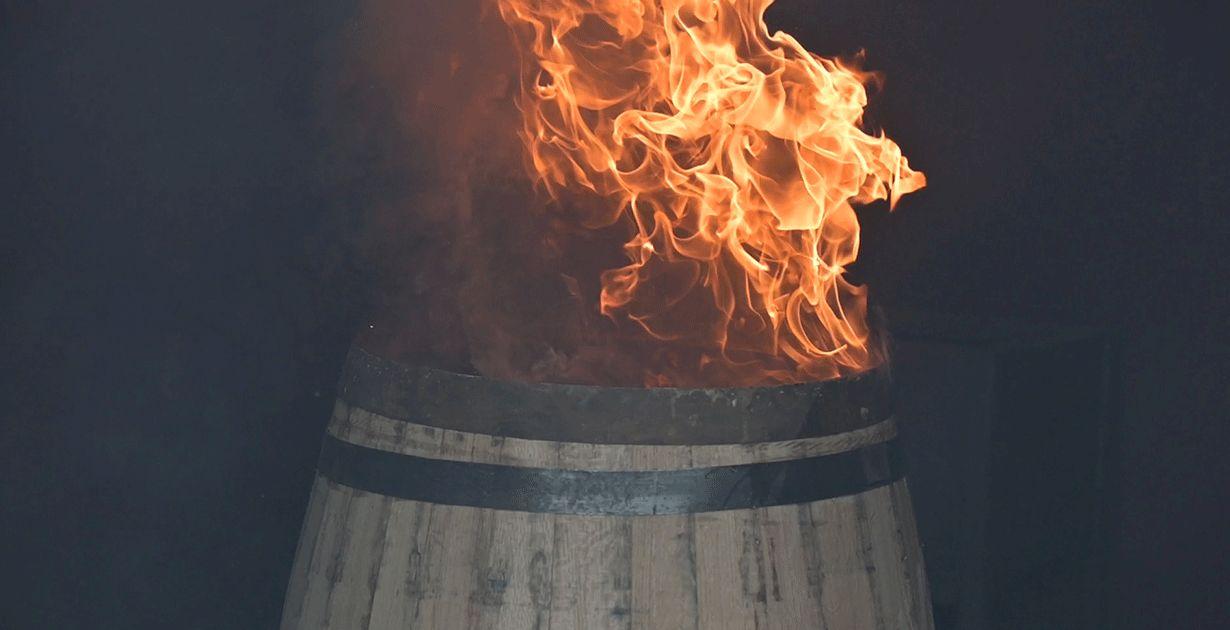
We also char our casks with an intense flame for 15–60 seconds. As well as releasing other flavour compounds and caramelising surface sugar, this creates a thin layer of charcoal on the inside of the cask that acts as a filter for undesirable sulphur compounds.


Giving and Taking: Reactions During Maturation
Throughout a whisky’s maturation, the spirit and cask are interacting. The spirit extracts colour and flavour from the wood, while the wood helps filter out unwanted compounds and allows some spirit to escape through evaporation. This phenomenon, often called the “angels’ share”, helps to concentrate a whisky’s flavours over time.
In terms of their profile, our new English oak casks offer less sweetness and more spice than the American oak ex-bourbon casks used by many UK whisky makers, with firmer tannins adding structure. They have a distinctive profile that bourbon casks cannot replicate, adding a clear English character to our Ascalon single malts.
Discover more about Ascalon, its English oak casks, and its whiskies at ascalonwhisky.com.