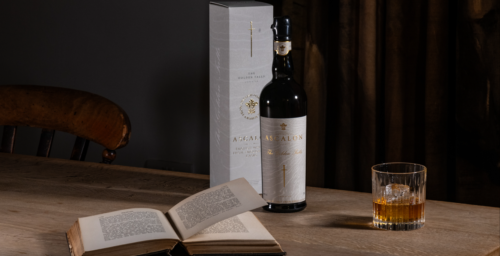
Distilled in 1937 at the long-closed Inverness distillery Glen Mhor, this extraordinary vintage was bottled by the Thompson Brothers in collaboration with Angus MacRaild of Whisky Sponge/Decadent Drinks.
The whisky’s journey is as remarkable as its age. The liquid was discovered in stone flagons acquired at an estate sale, once belonging to an early malt-whisky enthusiast who not only purchased cask stock for himself but even created his own solera systems. The flagons were bought blind, and when the Thompsons and MacRaild finally examined them, they realised they had struck gold.
Inside were three distinct treasures: two solera single malts and this pure vintage Glen Mhor. One solera held Springbank distilled between 1950 and 1978; the other contained a Glenlivet solera, its dates lost to time. But the Glen Mhor stood apart—a single 1937 vintage, filled into stone in 1959. In other words, an approximately 22-year-old, pre-war relic from a long-vanished distillery, still remarkably potent at 48.6% ABV.
Glen Mhor from this era was almost certainly made using floor-malted barley, dried with peat, and matured largely in old transport sherry casks. It remains my favourite closed distillery—though I also have a deep affection for the other lost Inverness names, Millburn and Glen Albyn. I’ve been fortunate enough to taste several Glen Mhor releases, including vintages reaching back to the 1960s (with the Rare Malts bottlings holding a special place for me), but never anything as ancient as this.
Only 37 half-litre bottles were ever produced, and both Angus and Phil Thompson have made it clear that their own bottles will never be sold. Every so often, though, one finds its way onto the back bar or makes a rare appearance at a whisky festival. In my case, my father returned from the brothers’ Dornoch whisky bar with a precious sample in hand—a gesture for which I’m endlessly grateful.
The few bottles that have surfaced at auction typically fetch around USD $5,000, making Phil and Simon exceptionally generous in offering pours for a remarkably reasonable £130 or so at the bar.
Deep red with a heavy amount of floating cask char.
Waxy nectarines and deep, sticky sherry lead immediately, followed by blackberry jam and a touch of crème brûlée. The alcohol presence is surprisingly assertive for 48.6%—not harsh or astringent, just lively and energetic. Notes of molasses and treacle tart unfold with time, joined by cherries, blackcurrants, and a subtle menthol-mint lift.
A burst of peat arrives first—earthy, grounding, and wrapped in a gentle sweetness. There’s a savoury, umami depth reminiscent of stewed bone broth, with a wonderfully textural mid-palate that encourages you to chew. It opens on old, waxy, paxarete-style sherry before transitioning into that unmistakable Highland peat: earthy rather than coastal, with none of the salinity or iodine of an Islay. As the peat settles, it melts into rich, dark stewed fruits. The progression is beautiful: umami → earthy peat → deep fruit sweetness.
Endlessly long and soaked in old bodega character—like warm sherry casks breathing in a Spanish cellar. The peat lingers, coating the tongue, while an industrial still-smoke note drifts around the palate, leaving a textured, almost tactile impression.
The spirit is dense with sediment and carries an impressive viscosity. Its deep colour immediately signals a long rest in an old sherry cask. This is truly an ethereal whisky. While I’m often drawn to old refill casks brimming with tropical fruit, this Glen Mhor stands as a textbook example of the deeply sherried, old-school Highland style of its era.
It’s thick, industrial, and unmistakably cask-driven, yet the underlying spirit is powerful enough to prevent the sweetness from taking over. Not a hint of sulphur—just a beautifully judged balance of earthy umami and rich sweetness.
With time and a touch of water, the overt sherry tones recede, revealing more of that industrial smoke and earthy depth. At the lower strength it becomes almost reminiscent of the old Mackinlay’s blends—familiar, comforting, and wonderfully evocative of another time.
This is approaching perfection for me. Other reviewers have rated this in the mid 90s, and I firmly feel the same.