

Earlier this month, we covered the Best of Show and Platinum winners from the 2026 Denver International Spirits Competition, the bottles that scored highest across one of America’s most rigorous double-blind judging formats.
Now we turn to the Double Gold tier: six whiskeys that scored between 96 and 97 points and came within touching distance of the very top.
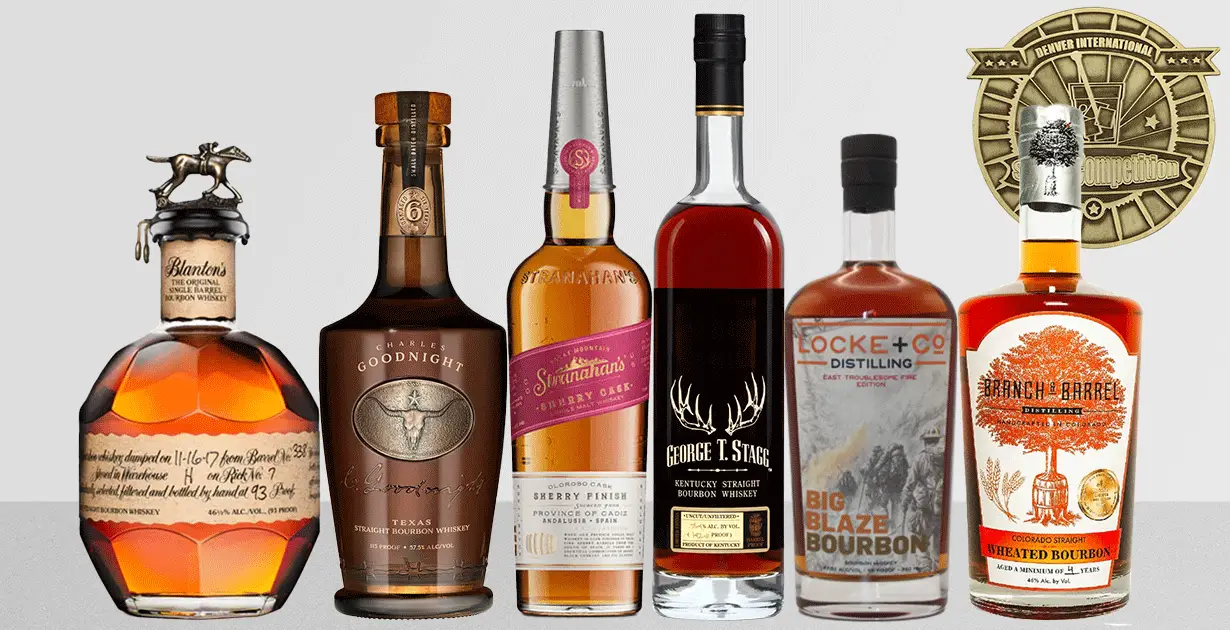
This year’s Double Gold whiskey cohort spans two of Kentucky’s most sought-after allocated bourbons, a Texas pot-still high-ryer, two grain-to-glass Colorado craft expressions, and a Colorado single malt from one of the category’s founding names.
Quick whisky question
Single malt is everywhere, but what does it mean? We want to know what the word “single” means to you. Three quick questions, under a minute.
There is something here for every kind of American whiskey drinker, if you can get your hands on it.
Blanton’s Original Single Barrel Kentucky Straight Bourbon Whiskey
Award: Double Gold
Score: 97
What Will Whisky Look Like in 2027? Voices from Whisky Live Paris
READ THE STORYTasting Notes: Nutmeg, spices, dry vanilla, honey, caramel, corn
Find Your Next Bottle: $120
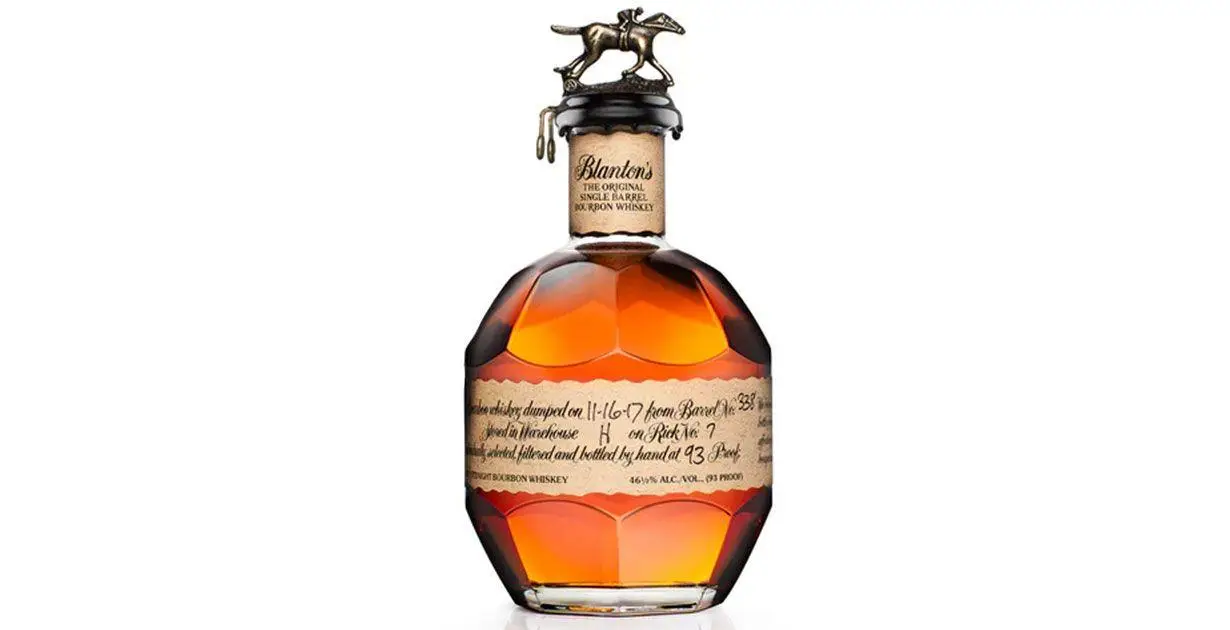
In 1984, Master Distiller Elmer T. Lee launched Blanton’s Original as a tribute to Colonel Albert B. Blanton. Blanton was the president of the George T. Stagg Distillery (now Buffalo Trace Distillery) from 1921 to 1954.
During his tenure, he would select “honey barrels” from Warehouse H and present the whiskey to visiting dignitaries and friends. In doing so, Lee effectively invented the modern single-barrel bourbon category.
Elmer T. Lee, who worked under Blanton at the distillery, created Blanton’s bourbon to honor his mentor. It was the first ever commercially advertised single barrel bourbon.
Every bottle of Blanton’s Original is drawn from a single barrel of Buffalo Trace’s high-rye Mash Bill No. 2, aged in the metal-clad Warehouse H at 46.5% ABV, with no batching, blending, or chill filtration.
Each bottle is hand-labelled with the barrel number, rick location, and dump date.
Ironically, the bourbon tends to be easier to find in the UK, where it retails at around £100 to £130, than it is on American shelves, where heavy allocation means most buyers rely on store lotteries and waitlists.
It is the kind of aspirational bourbon that every bourbon drinker wants to try at least once in their life. The win at DISC reinforces the fact that, even four decades later, it remains a high-quality and beloved bottle.
Charles Goodnight Texas Straight Bourbon
Award: Double Gold
Score: 97
Tasting Notes: Apricots, peaches, nectarines, toasted oak, caramel, vanilla, citrus, honey, cream soda, dark chocolate, baking spices, hazelnuts
Find Your Next Bottle: $66

Charles Goodnight was a 19th-century Texas cattleman credited with co-creating the Goodnight-Loving Trail, inventing the modern chuckwagon, and preserving one of the last remaining herds of plains bison.
William P. Foley II, his great-great-nephew and founder of Foley Family Wines and Spirits, launched this bourbon as a tribute to that legacy.
It is distilled entirely in copper pot stills using a triple-distillation process, which is unusual for bourbon, from a mash bill of 60% Texas-grown corn, 36% rye, and 4% barley. This is quite a high percentage of rye, adding peppery spice to the bourbon that works well with the high proof.
The whiskey ages for six years in new charred American oak, with the Texas climate doing much of the heavy lifting in terms of barrel interaction. It is bottled at a robust 115 proof and is non-chill filtered.
Currently distributed across more than 38 states, it retails at around $60-$80. As far as I can find, there is no UK distribution at present, making it one for the wishlist or the carry-on luggage.
George T. Stagg 2025
Award: Double Gold
Score: 97
Tasting Notes: Oak, vanilla, tobacco, cherry
Find Your Next Bottle: $999

George T. Stagg has been part of the Buffalo Trace Antique Collection since 2002, an annual release of highly limited, uncut and unfiltered whiskeys from the Frankfort, Kentucky distillery.
The 2025 release marks the 25th anniversary of the collection, and Buffalo Trace selected barrels that had been aging for 15 years and 4 months, bottled at 142.8 proof.
At that strength, it sits above the 140-proof threshold that classifies a spirit as a “hazmat” for air transport purposes. The program is notably selective: the 2021 release was skipped entirely because no barrels met the required standard that year.
I had the chance to taste the 2025 release, and it is not a whiskey that lets you ease in gently. The nose is deep and dense: golden syrup, sticky toffee pudding, old leather, vanilla bean, and a touch of petrichor. On the palate, there is oak, vanilla, dark fruits dusted with sugar, popcorn, and sugar-coated walnuts all make an appearance, wrapped in a wave of autumnal spice, with noticeable astringency.
This is classic Stagg: uncompromising, demanding, and rewarding for those willing to spend time with it. Have water on hand.
The official MSRP is $149.99, but the reality of the secondary market puts most bottles well above $1,000 in the US.
Branch & Barrel Distilling Wheated Bourbon
Award: Double Gold
Score: 96
Tasting Notes: Milk chocolate, honeyed red berries, cashew and caramel cream, marshmallow, banana brûlée
Find Your Next Bottle: At the distillery
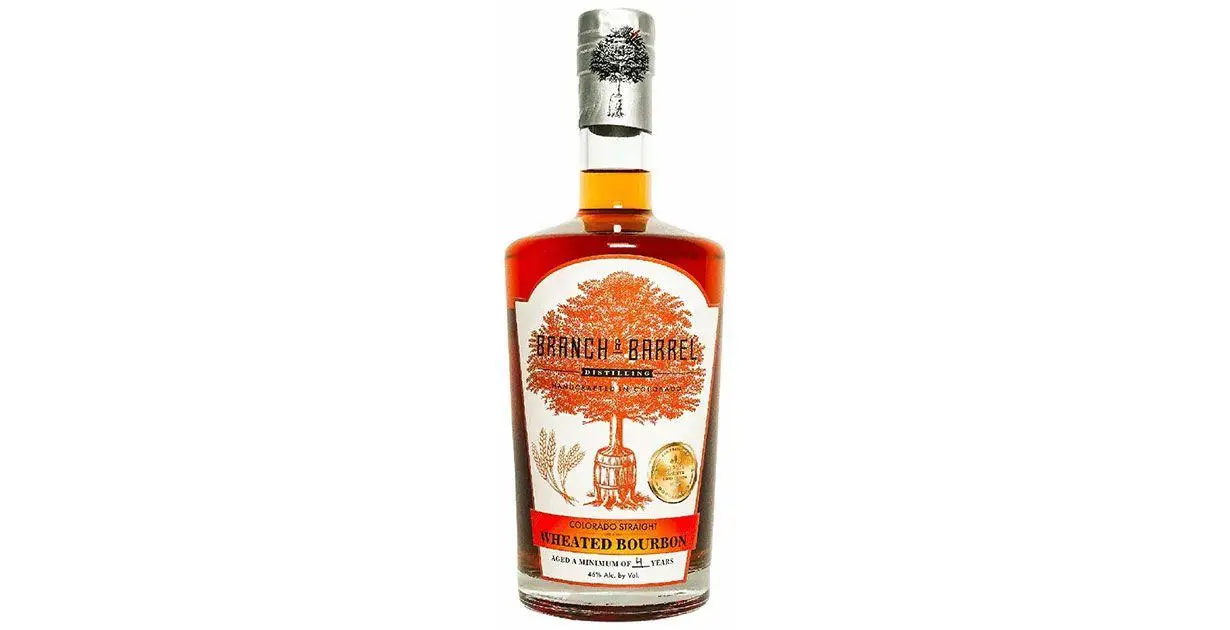
Branch & Barrel was founded in 2016 in Centennial, Colorado, just south of Denver, by a team that designs and builds much of its own distilling equipment and sources its grain and water locally.
The water comes from the Arapahoe Aquifer, a deep underground reservoir fed by Rocky Mountain snowmelt, and the grain is Colorado-grown. Distilling at altitude, with the state’s dry conditions and wide temperature swings, accelerates the maturation process in ways that distinguish Colorado bourbon from its Kentucky counterparts.
The Wheated Bourbon was originally conceived as a one-off release, but a string of competition medals across 2024 and 2025 persuaded the distillery to make it a permanent part of the core lineup.
It is made from a corn-dominant mash bill with wheat as the secondary grain in place of rye, aged in new charred American oak, and bottled as a straight bourbon.
The whiskey is available at the distillery’s tasting room in Centennial and at local retailers. Distribution occasionally reaches outside of Colorado. For anyone outside the state, it is a bottle worth seeking out on a visit.
Locke + Co Distilling Big Blaze Bourbon
Award: Double Gold
Score: 96
Tasting Notes: Honey, vanilla, toasted nuts, chocolate, maple, spice, pepper, brown sugar, cinnamon, fruits
Find Your Next Bottle: $56.99
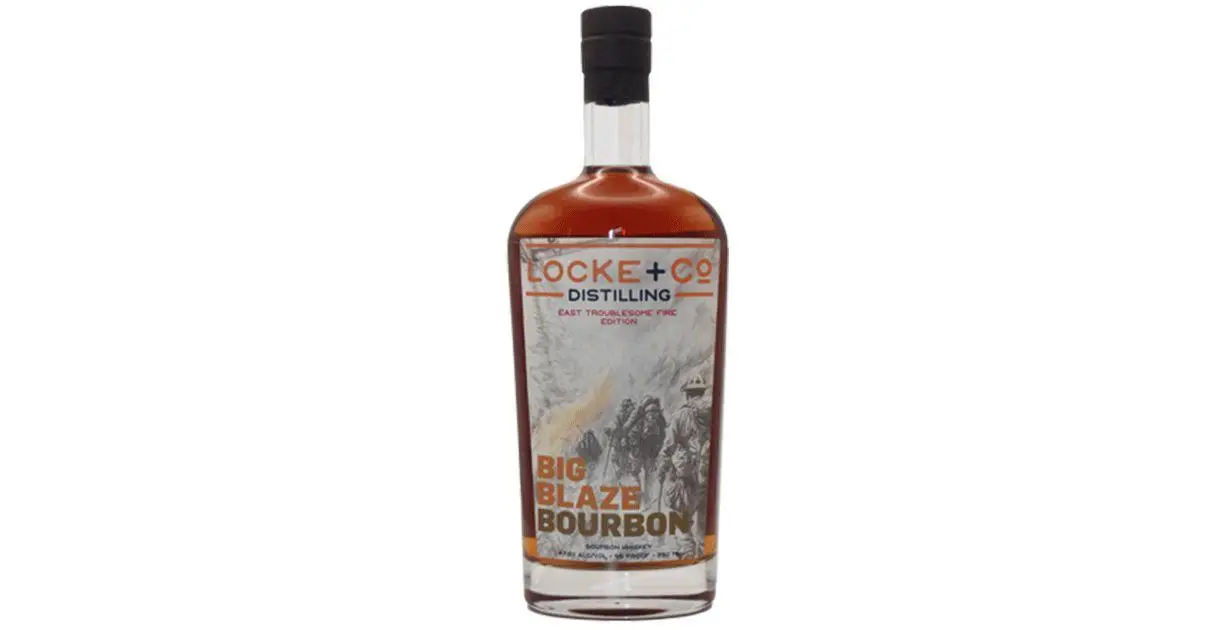
In October 2020, the East Troublesome Fire tore through more than 193,000 acres of Colorado, becoming the second-largest wildfire in the state’s recorded history. Among the casualties were vast stands of aspen trees.
Owen Locke, a sixth-generation Coloradan and founder of Locke + Co Distilling in Denver, saw an opportunity to turn that destruction into something meaningful. He began harvesting burned aspen logs, hand-cutting them into discs, and using them to finish bourbon, with a portion of every bottle sold going to the Grand County Fire Protection District’s fire assessment and mitigation program.
Big Blaze Bourbon is built on a blend of high-rye and high-wheat mash bill bourbons distilled in Texas, then shipped to Denver for finishing with the charred aspen discs alongside maple staves, which add balance to the smoke. It is bottled at 95 proof.
The first batch launched in 2024 and sold out quickly. The second batch, released statewide across Colorado in November 2025, is the one that picked up the Double Gold at Denver.
Big Blaze seems to be a recurring but always limited proposition.
Stranahan’s Sherry Cask
Award: Double Gold
Score: 96
Tasting Notes: Raisins, figs, dates, honey, Montmorency cherries, blackcurrant, grape syrup, nutty brine, buttery caramel, whipped creme, brown sugar, smoked cayenne
Find Your Next Bottle: $70
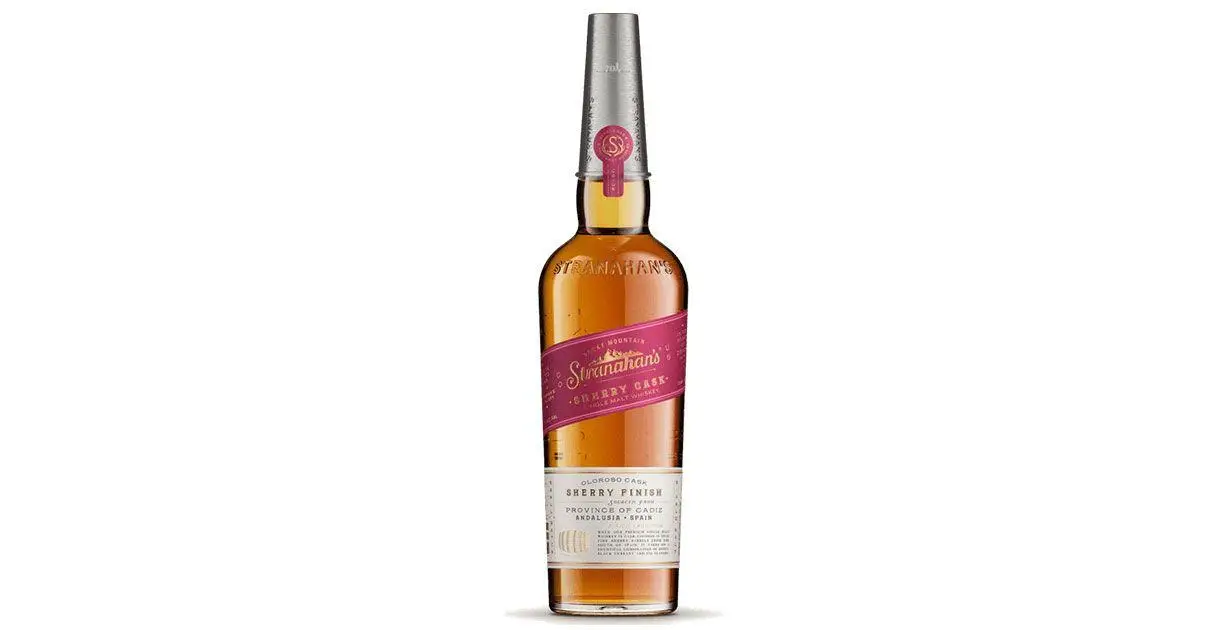
Stranahan’s was founded in Denver in 2004 by volunteer firefighter Jess Graber and Flying Dog Brewery founder George Stranahan, making it the first licensed distillery to operate in Colorado since Prohibition.
It is widely credited with sparking the state’s craft distilling boom, and its influence on the American single malt category specifically has been significant. The distillery was at the forefront of the campaign that led to the TTB’s official recognition of American single malt as a distinct category, finalized in January 2025.
Readers who followed our earlier DISC 2026 article will recognize the name: Stranahan’s Diamond Peak took Best of Show.
It is made from a 100% malted barley mash bill using Colorado grain and water from Eldorado Springs, double-distilled in copper pot stills, and finished in Pedro Ximénez sherry casks sourced from southern Spain after initial 5-7 year maturation in new charred American oak.
It has been a permanent core expression since its launch in 2017 and is one of the more accessible bottles on this list, available at major US retailers nationwide at around $70 to $80.
A Diverse Double Gold
This year’s Double Gold whiskey winners make for an interesting cross-section of American whiskey in 2026.
Two of the six come from Buffalo Trace’s most allocated tiers, where demand has long outpaced supply. One comes from a Texas distillery making bourbon in copper pot stills with a mash bill that sits closer to a rye whiskey than a traditional bourbon. And three come from Colorado, the state that hosted the competition, ranging from a pioneering single malt brand to two craft distilleries with a combined age of under two decades.
We would love to hear from you. Do these feel like the right bottles at the top of the Double Gold tier? Have you tried any of them, and do you agree with the scores? Or is there a whiskey you felt deserved recognition this year that didn’t make the list? Let us know in the comments.
 Latest On The Whiskey Wash