


Scotch whisky is enjoying a crowded, delicious era, even if the industry feels a little wobbly in places. With so many distilleries to explore, I keep coming back to a question hiding in plain sight on the labels: why do so many names begin with Glen, Ben, or Ard?
The answer is not a grand marketing conspiracy. More often, a distillery’s name is a small map of the land around it.
Start with Glen, the Scottish Gaelic word for “valley.” Once you know that, familiar bottles begin to tell you where they came from. Glenfiddich means “Valley of the Deer,” which explains the stag on its label. The Glenlivet takes its name from the River Livet, while Glendronach refers to a valley of brambles. Glengoyne’s “Valley of the Wild Geese” even accounts for the bird in its logo.
What Will Whisky Look Like in 2027? Voices from Whisky Live Paris
READ THE STORYBuckle in, though: not every Glen follows the same formula. Glen Grant honours its founding brothers, James and John Grant. A shared prefix is a clue, not a substitute for the full story.
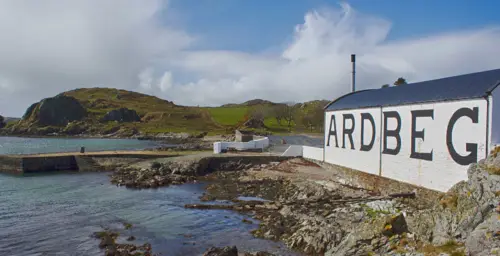
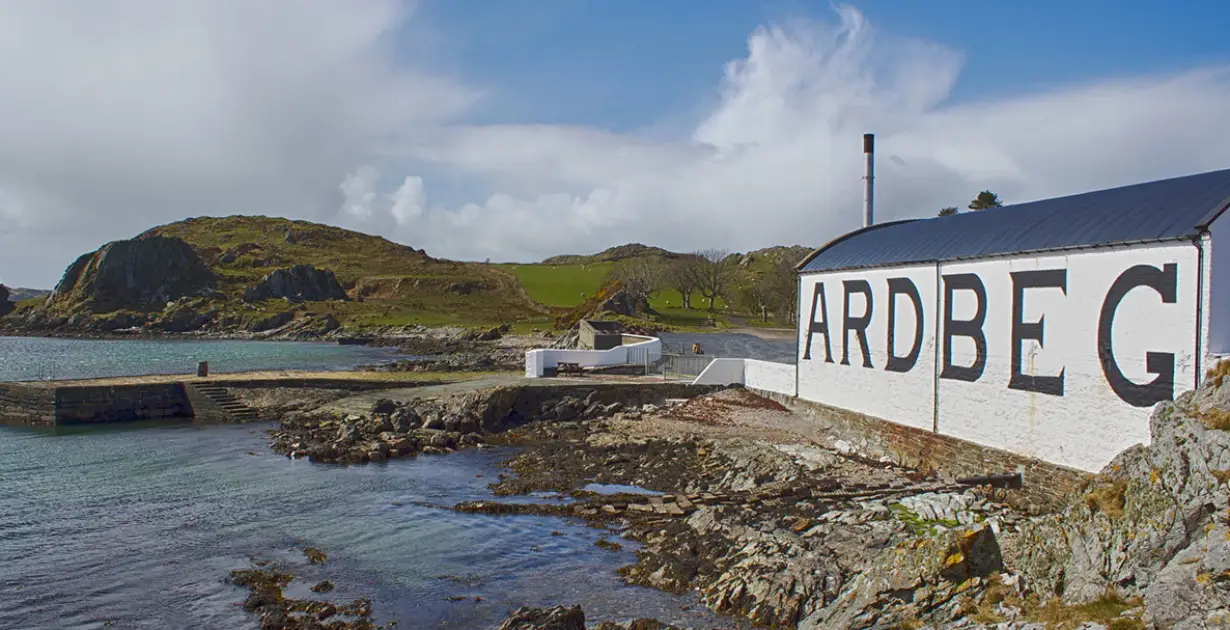
The same landscape runs through other recurring names. Ben points us towards mountains: Ben Nevis is named for the UK’s highest peak, Benriach means “speckled mountain,” and Benromach translates as “shaggy mountain.” Ard, meanwhile, often signals a height or headland. Ardbeg comes from a name meaning “little height,” while Ardnamurchan’s “point of the great seas” sounds every bit as rugged as its coastal setting.
Water is everywhere, too. Aberlour refers to the mouth of the Lour Burn, and Aultmore means “the big burn.”
 Trending Content

Not every distillery name needs a Gaelic translation to be interesting. Ben Nevis may borrow a mountain, but Balvenie takes its name from a castle. Glen Grant remembers its founders. The newer Eight Doors is named for Jan de Groot’s eight-sided house, while Kingsbarns recalls village barns once used to store grain bound for royal residences. These names preserve bits of local history that might otherwise be easy to miss. Even when the meaning seems straightforward, there is usually a place, person or story worth looking up.
For me, that is the pleasure of tracing whisky names. They turn a shelf of bottles into a tour of Scotland’s valleys, hills, rivers and communities. Next time you pick up a dram, which distillery name would you most like to investigate?
For a more detailed look at the names, and to hear my occasionally terrible pronunciations, you can watch my latest YouTube video.