








In March 2026, at the World Whiskies Awards in the United Kingdom, judges handed their top Indian prize to a whisky that carries no age on its label. Paul John’s Port Select Cask was named World’s Best Indian Single Malt, winning inside the No Age Statement category against bottles that wear their years with pride. In India the missing number is not an omission to apologize for, it is the result of a deliberate choice.
The story behind that empty space runs through four distilleries, two climates, and a quiet argument with Scotland about what age really means. This guide explains why Indian single malt matures so much faster than Scotch, why its distillers rarely chase high age statements, and how the north and south of the country produce two very different styles. By the end you should be able to read an Indian bottle without leaning on a number, and to choose the first one worth pouring based on the Scotch you already enjoy.

Why Age Says Less About Whisky Than You Think
Most drinkers carry one firm belief into a whisky shop, that a bigger number on the bottle means a better spirit inside it. The belief is comfortable, widely shared, and mostly wrong about what age actually does. Age is not a measure of quality in whisky, it is only a record of how long the liquid sat inside a barrel. What genuinely changes a spirit is the interaction between wood, air, and alcohol, and that interaction can run slowly or quickly depending on where the barrel rests.
What Will Whisky Look Like in 2027? Voices from Whisky Live Paris
READ THE STORYScotch built much of its prestige on the age statement, because in a cold northern climate time really is the main lever a distiller can pull. A ten-year-old and an eighteen-year-old there taste like different investments of patience.
Over the decades that honest shorthand hardened into a marketing rule, and the rule now works against the industry that first invented it. When maturation happens somewhere warmer, the number on the label stops describing the whisky in the glass, and Scotch has little room to say so without undermining its own shelf.
The Climate That Speeds Up Indian Single Malt Maturation
India’s advantage is not a secret ingredient, it is simply the weather. In Scotland maturation slows to almost nothing in winter, and once the temperature drops below freezing the exchange between spirit and oak effectively stops for months at a time. In Goa or Bangalore the heat rarely lets up, and the barrels keep working through the entire year without a dormant season.
 Trending Content




Heat makes the wood expand and drives the spirit deep into the oak, then every small shift in temperature pushes and pulls the liquid back out again. That constant motion draws color, tannin, and flavor from the barrel at a pace Scotland cannot hope to match. A cask of three to five years in this environment can carry the depth and dark hue of a Scotch left alone for ten or fifteen.
The whisky has not aged faster in any literal sense, it has simply matured faster, and those two ideas are not the same thing.
The Price of Maturing Whisky This Quickly
Speeding up maturation carries a real cost, and in India that cost is paid to the angels. Distillers use the phrase angel’s share for the whisky lost to evaporation while a cask sits and matures. A Scottish warehouse gives up around two percent of a barrel each year, a figure distillers have lived with for centuries. In the tropical heat of Goa and Bangalore that annual loss runs somewhere between eight and fifteen percent.
A distillery can surrender a third of a barrel long before the whisky is ready to bottle.
The upside is concentration, because as the volume falls the remaining liquid grows richer and more intense in flavor. The downside is a hard ceiling on how long the whisky can age. Leave an Indian cask too long and the wood begins to dominate, turning the whisky tannic and bitter, which is precisely why these distilleries rarely chase the tall age statements that Scotland prizes. They are not being modest about age, they are being honest about their climate.
In the South, Indian Whisky’s Clock Runs Fastest
The two southern distilleries sit where time moves quickest of all. Amrut, based inland and at altitude in Bangalore, was the pioneer that first put Indian single malt on the map, and its 2010 release Fusion drew serious attention from critics who had not taken the category seriously before. The warm, year-round climate pushes its whiskies toward maturity several times faster than a temperate warehouse ever would.

Paul John works on the Goan coast, a few miles from the Arabian Sea, in heat and humidity that barely shift between the seasons.
That relentless environment gives its whiskies a rich, tropical character and the rapid cask integration that carried the Port Select Cask to its award. Both distilleries lean on Indian six-row barley, a hardy grain that most European producers abandoned long ago, which lends an oily texture and a heavier cereal note to the spirit before it ever meets oak.
In the North, the Malt Keeps a Slower Time
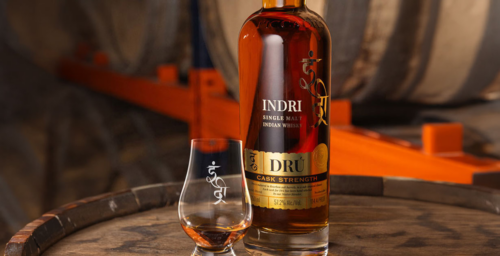
Move north toward the Himalayan foothills and the clock changes its rhythm entirely. Rampur, in Uttar Pradesh, and Indri, in neighboring Haryana, sit in a climate of violent extremes rather than steady heat. Summers there turn fierce and dry, with temperatures climbing toward fifty degrees Celsius and forcing the spirit hard into the oak. Winters then fall close to freezing, and that cold brings the long dormant pause a Scottish warehouse knows well.

The seasonal swing there does two important things at the same time. It still accelerates maturation well beyond the Scottish pace, yet the winter rest holds the whisky back from the aggressive intensity of the south.
The result is a softer, more layered style that sits closer to a gentle Speyside than most drinkers expect from India. Rampur leans on ex-bourbon and ex-sherry casks for a refined, floral profile, while Indri built its reputation on a triple-cask approach and a price that made the category easy to try.
What the Missing Age Statement Means for Your Glass
Once age comes off the table as a guide, the useful question becomes where a whisky was made rather than how long it waited. That single shift makes the Indian shelf far easier to read. A drinker who loves bold, sherried Speyside malts will find a natural match in Amrut, with its heavy body and its notes of dark chocolate and spice. Someone drawn to fruity, richer Highland and port-finished styles will recognize the tropical sweetness of Paul John.
Drinkers who prefer the delicate end, the softer Speyside or the gentle Lowland malts, will feel at home with Rampur and its floral restraint. Anyone who simply wants an approachable, easy-drinking entry point, in the mold of a reliable Highland or a good blend, will find Indri built for exactly that. None of these whiskies are strict copies of Scotch, and they are not meant to be. They are a translation of preference, a way to step into the category from familiar ground.
The age statement began as an honest Scottish shorthand for patience, in a country where patience was the main thing a distiller had to offer. India inherited none of that history and saw little reason to keep the habit. The whiskies now collecting the industry’s biggest prizes are making the same argument, quietly, from behind labels that leave the number off. What matters is not the years a spirit has counted, but the climate that shaped it.