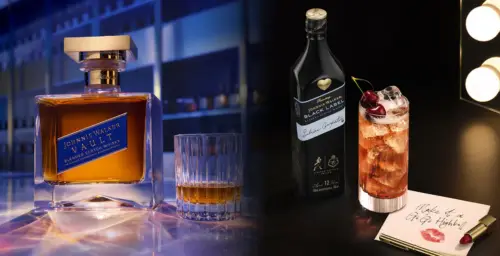
What does a £1,100 whisky have in common with a £35 one? More than you might think. Johnnie Walker’s new Vault and Sabrina Carpenter Black Label edition sit at opposite ends of the price spectrum, yet I think both show a sharper understanding of Scotch drinkers than many more complicated releases.
One gives luxury buyers a compelling story and presentation. The other gives a familiar whisky a fresh audience without pretending it needs a new recipe.
Vault makes its case through provenance and presentation. It is the first permanent addition to the Johnnie Walker range under the Vault name, which refers to the collection of rare samples beneath the brand’s Princes Street home. The blend reportedly includes whisky from Brora made before the distillery closed in 1983, alongside spirit from its reopened incarnation. That is an intriguing connection to a distillery whose history stretches back to the original Clynelish.
What Will Whisky Look Like in 2027? Voices from Whisky Live Paris
READ THE STORYI have not tasted Vault, so I cannot tell you whether the liquid justifies £1,100. But the bottle looks the part, and its Brora story gives collectors something more substantial to consider than a handsome box alone.
The Sabrina Carpenter edition succeeds by doing almost the opposite. Inside, it is the same 12-year-old Black Label I already enjoy; the change is to its look, not its contents. That is precisely why I like it. Black Label does not need reinventing to reach someone who has never considered buying Scotch. A Carpenter fan might pick up the bottle as merchandise, then discover the whisky itself.
Meanwhile, an existing Black Label drinker gets another reason to buy a favourite. It is a bold partnership because her audience looks different from the traditional whisky demographic, and that difference is the point.
 Trending Content






Both releases also benefit from Johnnie Walker’s remarkably clear range. Most shoppers understand where Black Label and Blue Label sit without studying a maze of cask types and special editions. Vault can occupy a luxury space without inviting a straightforward age-statement comparison, while the Carpenter bottle remains unmistakably Black Label. Other Scotch brands could learn from that restraint. A collaboration or an exceptional presentation can make a product feel new without making the range harder to navigate.
For me, these bottles prove that good whisky marketing does not have to follow one price point or one kind of drinker. Vault offers an occasion; Carpenter’s Black Label offers an invitation. Which approach would make you more likely to pick up a bottle?
For a closer look at both releases, and my full thoughts, check out my YouTube video.