

A new release from Shizuoka occupies an unusual place on the shelf, because in its home market it can legally be called neither bourbon nor Japanese whisky.
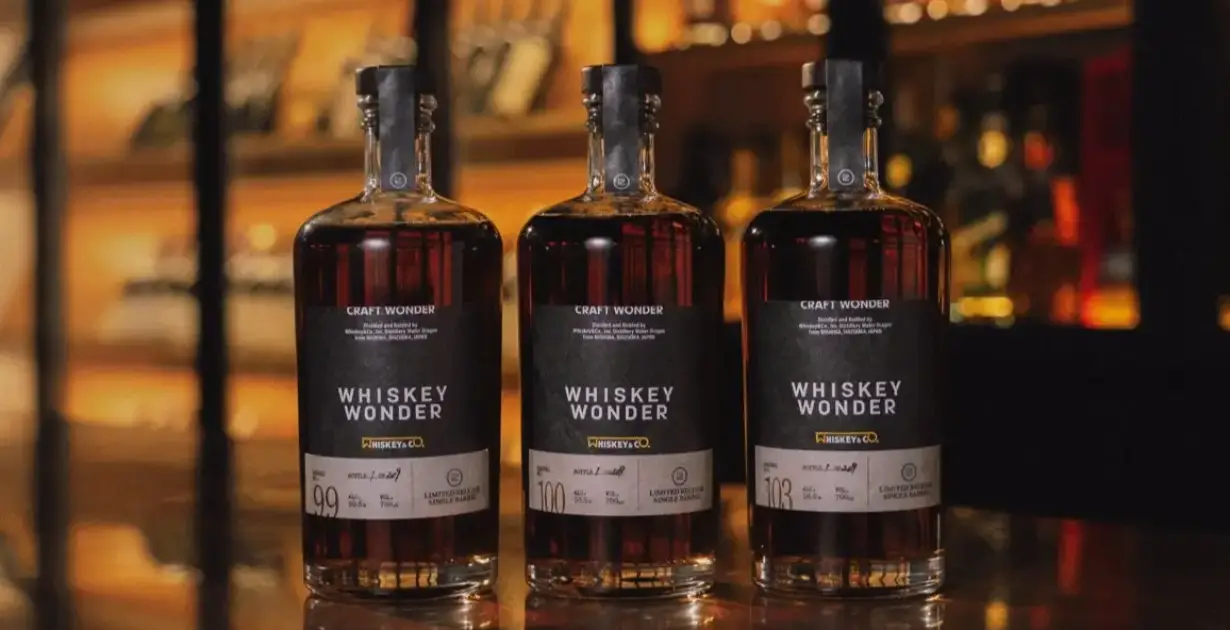
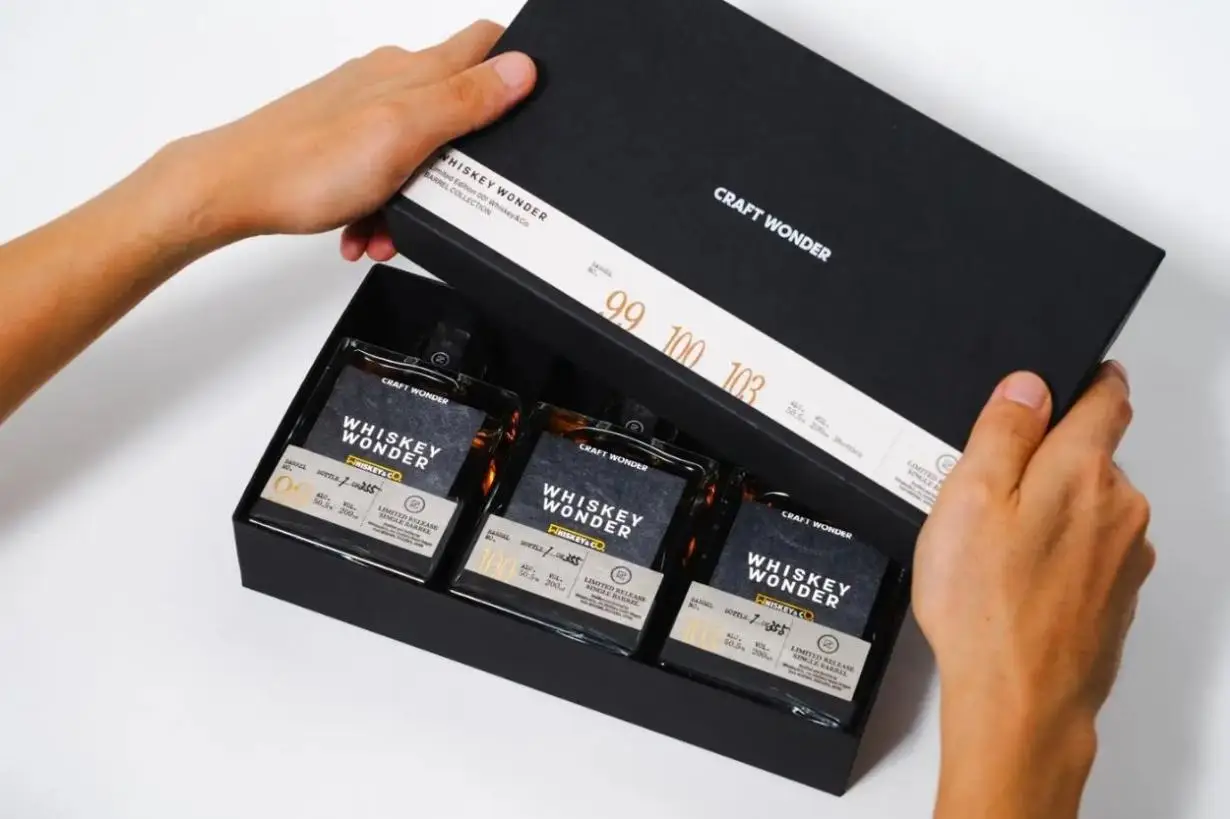
Craft Wonder, a Tokyo drinks brand, launched Whiskey Wonder Limited Edition 001 on October 2. It is a set of three single-barrel whiskeys, all distilled and matured by Whiskey&Co. at its Distillery Water Dragon in Mishima. Japan Whisky Press reported the details of the release the following day. All three barrels were filled with the same new make on the same day. Each then spent two years in new American white oak with a No. 4 “alligator” char, and each was bottled on its own at 50.5% ABV, or 101 proof.
The companies have disclosed that the mash bill uses Japanese-made corn grits, rye and malt, but they have not published the proportions. Whiskey&Co. calls its method Japanese “Bourbon Whiskey” Style, a phrase that keeps the release clear of two protected names at once.
Why the Label Stops Short of Bourbon
Bourbon has been a protected term in Japan for nearly five years. On December 22, 2021, Japan formally recognized bourbon and Tennessee whiskey as distinctive products of the United States. In the Distilled Spirits Council’s words, this means only bourbon “produced in the United States according to official U.S. standards may be sold in Japan.”
 Trending Content

US federal regulations require bourbon to come from a mash of at least 51% corn. It must be distilled to no more than 160 proof, go into new charred oak containers at no more than 125 proof, and be bottled at 80 proof or higher. Bourbon has no minimum age, but a whiskey needs at least two years in wood before it can be called straight.
On paper, Water Dragon follows the barrel side of that recipe closely. New charred oak is the choice that defines the style, and the two-year age happens to match the American threshold for straight whiskey. Without the corn percentage, though, nobody outside the distillery can say whether the mash would meet the 51% rule. Either way, the place it was made rules out the name.
Every Kirkland Bourbon Ranked, From Worst to Best
READ THE STORY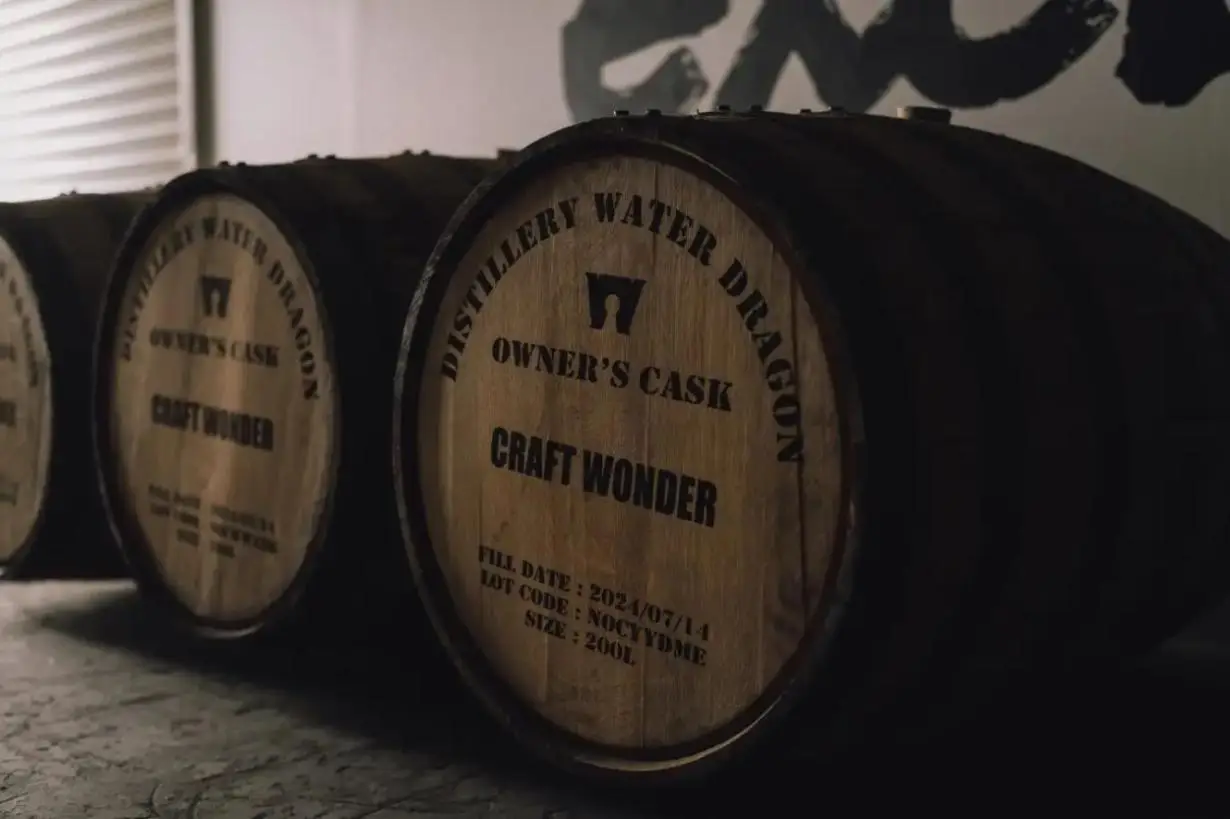
Too Young to Be Japanese Whisky
Age, rather than geography, is what keeps the whiskey out of Japan’s own category. The Japan Spirits & Liqueurs Makers Association brought in its labeling standard in 2021, with a transition period that ended in April 2024. Under that standard, spirit must mature in wooden casks in Japan for at least three years before it can be sold as Japanese whisky. The standard also requires malted grain, distillation and bottling in Japan, and a minimum strength of 40% ABV.
Water Dragon’s whiskey meets almost every other part of that standard. It contains malt, it was distilled and bottled in Mishima, and it is well above the minimum strength. It is one year short on age, and Japan Whisky Press noted in its report that this gap keeps it out of the category.
The standard is voluntary and binds only the association’s own members. Japan’s tax law still defines whisky so loosely that, as the Tokyo-based site Nomunication has pointed out, a product containing only 10% actual whisky can carry the word. In March 2025 the association announced that it would seek geographical indication status for Japanese whisky, which would make its rules legally binding across the industry. The National Tax Agency is reported to be working on a legal definition, although no timeline has been made public.
The Commercial Case for Bourbon-Style Whiskey in Japan
For a young distillery, the economics behind the bourbon-style approach are clear enough. Japan Whisky Press observed that spirit aged in new charred oak picks up color and flavor quickly, especially in summers as hot as Shizuoka’s. Water Dragon only opened in 2023, so the method lets it sell mature-tasting whiskey years before a Scotch-style operation could.
Whiskey&Co. was founded in January 2021, and its president, Shohei Omori, has said that the company “specialized in the style and adopted its signature spelling.” Its whiskeys have already won a master medal at The World Whisky Masters 2025 and a top gold for new-born spirits at the Tokyo Whisky & Spirits Competition 2026.
The approach also has precedent in the same corner of Shizuoka. According to the Malt Whisky Yearbook 2026, Kirin founded Fuji Gotemba in 1973 together with Seagram & Sons and Chivas Brothers. Most Japanese distilleries followed Scottish practice, but Fuji Gotemba also took on production methods from Canada and the United States. Its grain whiskies, made with column stills, a kettle and a doubler, showed long ago that North American technique could take root at the foot of Mount Fuji.
Three Barrels From One Spirit
The release is built to show how far identical spirit can drift in different barrels. Nakagawa, who leads CRAFT WONDER, chose the three casks, numbered 99, 100 and 103, from eight he tasted at the distillery. In the brand’s press release, he argued that blending them would have hidden the differences that grew out of identical spirit.
Craft Wonder describes Barrel 99 as dense and fruit-driven and Barrel 100 as the spiciest and most structured. Barrel 103, in the brand’s words, is the softest, with caramel and vanilla. The brand also says Mishima’s soft Fuji groundwater, used for mashing and for bringing the spirit down to strength, gives a smoother texture than the hard limestone water associated with Kentucky. That claim is the brand’s own, and water is only one of many differences between distilling in Japan and in Kentucky.
The bottling strength is also a deliberate nod to American whiskey law. Japan Whisky Press reports that 101 proof was chosen as “one step above the 100-proof benchmark” set by the Bottled-in-Bond Act of 1897.
Supply is very limited, and no more of this edition will be made. Each barrel produced 209 full 700ml bottles at ¥19,800, and there are also 355 sets of three 200ml bottles at ¥20,900. Sales run through a CRAFT WONDER pop-up at Tokyo Midtown until October 29, the brand’s online store and department stores, and no export has been announced.
What Would Settle the Name
Water Dragon cannot use the American word and does not yet qualify for the Japanese one, so its label names a method rather than a category. If the distillery left a future batch in wood for a third year, that whiskey could qualify as Japanese whisky under the association’s standard, despite the new charred oak and corn. The rules would then have to make room for a Japanese whisky made, by design, to taste like Kentucky.