



There is something special about bourbon at around ten years old.
By that point, the barrel has done real work and, provided careful maturation and protection against over-oaking, there can be some amazing results. Caramel deepens. Oak becomes structural rather than decorative, and spice sharpens. What you are left with is not just sweetness, but character.
So, it makes perfect sense that more seasoned bourbon drinkers will seek out age-stated treasures that deliver the perfect balance of mature character and layered flavor. Three such bourbons are often part of this bourbon hunting mission.
What Will Whisky Look Like in 2027? Voices from Whisky Live Paris
READ THE STORYEagle Rare 10 Year Old from Buffalo Trace Distillery sits at the center of the allocation conversation in the United States. It is chased in some states and quietly available in others.
Russell’s Reserve 10 Year Old, made at Wild Turkey Distillery, rarely inspires panic buying, yet seasoned bourbon drinkers often speak about it with real respect.
Then there is Knob Creek 9 Year Old Small Batch from James B. Beam Distilling Co., bottled at 100 proof and built with a very different kind of confidence.
 Trending Content


All hover around the same age and price.
So, the question is, with $30-$60 to spend, which of these bourbons offers the best bang for your buck?
In the Glass First: How They Actually Taste
Before we get into mash bills or medals, let’s focus on flavor.
Eagle Rare 10 Year Old
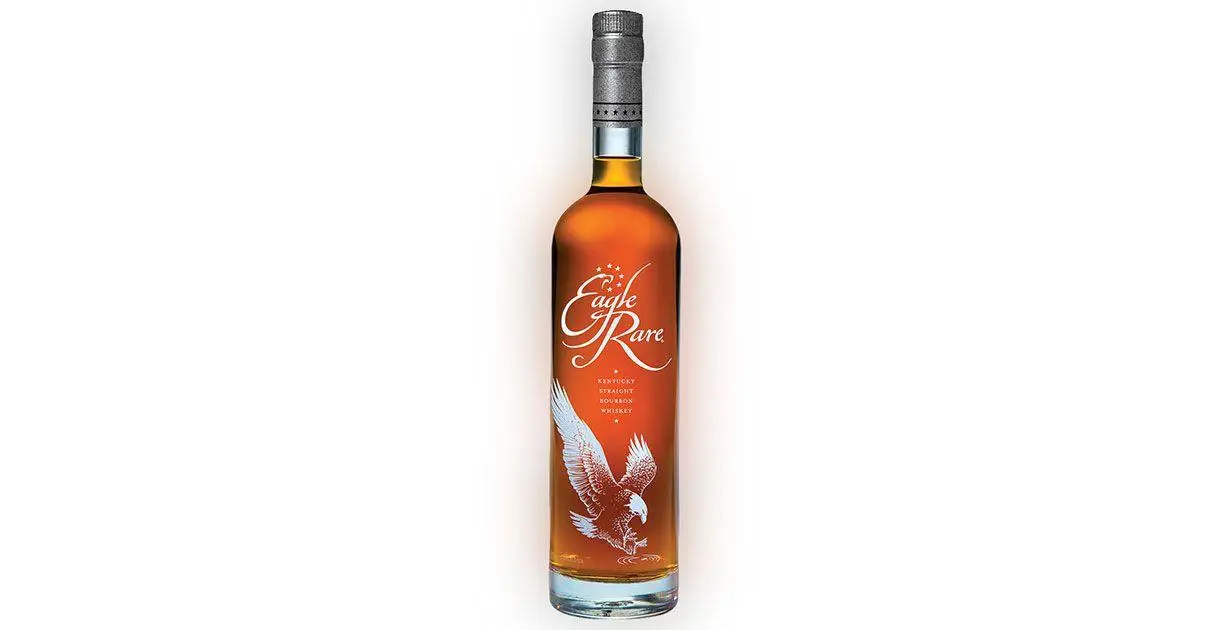
I have spent a lot of time with Eagle Rare 10, and it remains one of my go-to higher-aged bourbons.
It is approachable and easy to drink, yet clearly mature. I consistently find honey, caramel, and a nutty core, layered with burnt orange peel and toasted oak. There is boldness here, but the 90 proof keeps it composed and balanced.
In the UK, it is relatively easy to find and feels like high-quality bourbon for a very reasonable price. In many parts of the US, it is much harder to secure at retail.
Russell’s Reserve 10 Year Old
Our very own Phil Dwyer describes a “remarkable, room-filling aroma” with “cherry cough drops and rich blackberry sweets,” when tasting Russell’s Reserve 10 recently. He highlights a “distinct menthol quality” linked to its rye content. On the palate, he highlights a “jammy profile of blackberry and cherry” with mint and spice cutting through vanilla sweetness.
That aromatic lift is what stands out to me as well. Russell’s Reserve feels expressive at 90 proof. It has structure and integration rather than sheer intensity. It isn’t powerful, but it isn’t meek either.
Knob Creek 9 Year Old Small Batch
Jordan Moskal of Breaking Bourbon notes “a slight nuttiness” on the nose, followed by vanilla and oak. He describes “rich oak” and peppercorn on the palate, with a finish of “aged oak, vanilla, and leather” plus black pepper spice.
In my experience, the 100 proof makes an immediate difference. Knob Creek carries more weight across the mid palate, and the oak arrives earlier and more firmly. I love this in an Old Fashioned.
Eagle Rare feels polished and easy. Russell’s Reserve highlights aromatic rye. Knob Creek brings proof and power.
The Technical Snapshot: Why They Taste Different
Flavor does not appear out of nowhere. At nine or ten years old, mash bill, barrel treatment, and proof make a visible difference.
Eagle Rare 10 is produced at Buffalo Trace Distillery and bottled at 90 proof. It uses the distillery’s Mash Bill #1, widely described as a low rye recipe, though exact percentages are not publicly disclosed.
It carries a 10 year age statement and originally displayed single barrel designation. That was dropped from the label in the mid-2010s, but it is widely accepted that it is still a single barrel expression.
A lower rye mash bill and moderate proof tend to emphasize caramel sweetness and polish over spice.
Buffalo Trace also leans heavily on barrel selection and storage, with the location of the barrels in their huge warehouses making a notable difference to the final profile.
Russell’s Reserve 10 is made at Wild Turkey Distillery, also bottled at 90 proof, and aged for 10 years in heavily charred No. 4 barrels. The Wild Turkey mash bill is commonly cited as 75% corn, 13% rye, and 12% malted barley.
The higher rye and heavy char help explain the spice and structured oak.

Russell’s Reserve 10 is a small batch bourbon, meaning that it is blended from a select number of barrels. Here, the focus is on consistency and house character
Knob Creek 9 comes from James B. Beam Distilling Co. and is bottled at 100 proof with a 9 year age statement. Beam describes it as small batch and inspired by the pre-Prohibition style. Again, consistency is key here, but the extra proof shifts the texture and intensity when compared to Eagle Rare and Russell’s Reserve. At similar ages, proof can matter as much as time.
Awards and Blind Results: Does the Trophy Cabinet Matter?
Awards are not everything. But when judging is blind, they offer useful context.
At the 2022 International Wine & Spirits Competition, Knob Creek 9 Year Old Small Batch was awarded a Gold Medal with 98 points. That result came from a blind panel evaluating nearly one hundred bourbons. It also won two Gold Medals in 2021 at the San Francisco World Spirits Competition and the International Spirits Challenge.
Russell’s Reserve 10 has earned Double Gold 2022 San Francisco World Spirits Competition as well as accolades at the TAG Awards, ASCOT Awards, and The American Whiskey Masters, all in 2022.
Eagle Rare’s website lists multiple Double Gold medals across different years, highlighting its long track record in major competitions including the North American Bourbon & Whiskey Competition and the International Whisky Competition.
In the 2019 edition of Jim Murray’s Whisky Bible, Eagle Rare 10 Year Old was named Best Bourbon up to 10 Years.
On blind tables, widely available bottles such as Russell’s Reserve 10 regularly compete with and beat more hyped names. Reputation does not always guarantee victory.
Pricing and Availability: Is There an Allocation Premium?
Price changes the conversation quickly.
In the United States, Eagle Rare 10 Year Old often carries a suggested retail price around the low $50 mark, though availability varies widely by state, as do the premiums.
Russell’s Reserve 10 and Knob Creek 9 are generally easier to find at retail in the US, often priced much lower than Eagle Rare, with a range of about $35-$60.
In the UK, the picture shifts. Eagle Rare 10 is frequently available in the £30-£40 range at retailers such as The Whisky Exchange and Master of Malt.
Knob Creek 9 sits in a similar bracket, and is also easy to find in the UK.
Russell’s Reserve 10 is much harder to get your hands on over here; The Whisky Exchange currently lists the bottle for over £80.
In other words, the so-called allocation premium depends heavily on where you are based. In the US, Eagle Rare can feel scarce. In the UK, it often feels like one of the strongest values in the ten-year category.
What Do Bourbon Lovers Think?
Look at bourbon forums, and a clear pattern appears.
Knob Creek 9 is often described as one of the best value 100 proof bourbons available. Enthusiast reviews frequently praise its age statement, structure, and consistency for the price.

Eagle Rare 10 generates a different kind of discussion. Availability and pricing come up almost as often as tasting notes for those based in the US.
Russell’s Reserve 10 tends to draw steady, less dramatic approval. It is rarely treated as rare, but often respected for balance.
Among experienced drinkers, the conversation usually comes back to flavor and value rather than hype.
Which Bourbon Wins?
Eagle Rare 10 Year Old is the bourbon I have spent the most time with recently. It is a consistent bottle on my shelf. In the UK, it is easy to find at a fair price, which makes it even more appealing. It is mature, approachable, and quietly confident. For what it costs here, it is hard to argue against. For me, the value of Eagle Rare 10 Year Old in the UK is difficult to turn your nose up at. For that reason, Eagle Rare 10 is my pick this time. However, it remains a very close call between Eagle and Knob Creek 10.
As I said before, though, your location matters when pitting bottles like this against one another. And I am sure that many a US-based drinker will disagree with me due to the inflated price of Eagle Rare 10 in its domestic market.
So, for US drinkers who want more power and structure, Knob Creek 9 Year Old Small Batch is a fantastic choice. The 100 proof brings backbone and intensity that stand out at this age.
Russell’s Reserve 10 Year Old feels like the quiet, value-driven contender. It delivers a delicious and reliable expression of the balance and rye-driven character that Wild Turkey is known for.
So, which bourbon would you choose? Let us know in the comments below.