

Laphroaig is one of the most famous scotch whiskies from Islay. It is also one of the most polarizing.
But what sets Laphroaig apart is more than flavor. Its history, people, and community have shaped an Islay icon. If you are new to scotch or curious about peated malts, here are five things you should know about Laphroaig.
How to pronounce ‘Laphroaig’: The name is tricky, but saying “Laphroaig” correctly is easier than you think
One of the first hurdles with this whisky is the name. Many people wonder how to pronounce Laphroaig. The correct way is la-FROYg.
It is easy to see why the spelling confuses people. Common attempts include “la-fro-ig,” “la-frog,” and even “la-fray-oog.”
Laphroaig translates to “the beautiful hollow by the broad bay.” The name describes the distillery’s setting on Islay’s rugged southern coast.
Laphroaig’s history is full of survivors and trailblazers
Laphroaig was founded in 1815 by the Johnston brothers on Islay. For more than two centuries, it has endured wars, ownership changes, and shifts in taste, yet it has never lost its bold identity.
One of the most important figures in its story was Ian Hunter, who ran the distillery in the early 20th century. During Prohibition, he secured Laphroaig’s survival by having it imported as medicinal whisky thanks to its iodine flavor. This loophole gave the brand rare access to the American market when most scotch distilleries were shut out.
Another defining figure was Bessie Williamson. She began as Hunter’s secretary and inherited the distillery after his death in 1954. Williamson became the first woman to own and run a Scotch whisky distillery. She championed Laphroaig in the United States and helped establish the global reputation of Islay whisky.
Laphroaig even gained royal recognition. In 1994, Prince Charles (now Charles III) awarded it the Royal Warrant.

Peat smoke gives Laphroaig its unforgettable flavor
Laphroaig is often called the most richly flavored of all scotch whiskies. That reputation comes from its heavy use of peat, resulting in a whisky full of smoke, iodine, seaweed, and brine.


Many drinkers describe the first sip as tasting like antiseptic, campfire, or even burnt rubber. Behind the smoke, though, there are layers of sweetness.
This bold profile makes Laphroaig one of the most divisive whiskies in the world. Some love its intensity, while others cannot take a second sip.
Rather than ignore the divide, Laphroaig leans into it. Its “Opinions Welcome” campaign highlights both glowing praise and harsh criticism, showing that love or hate, nobody forgets their first dram.
The Laphroaig core range offers icons and cult favorites alike
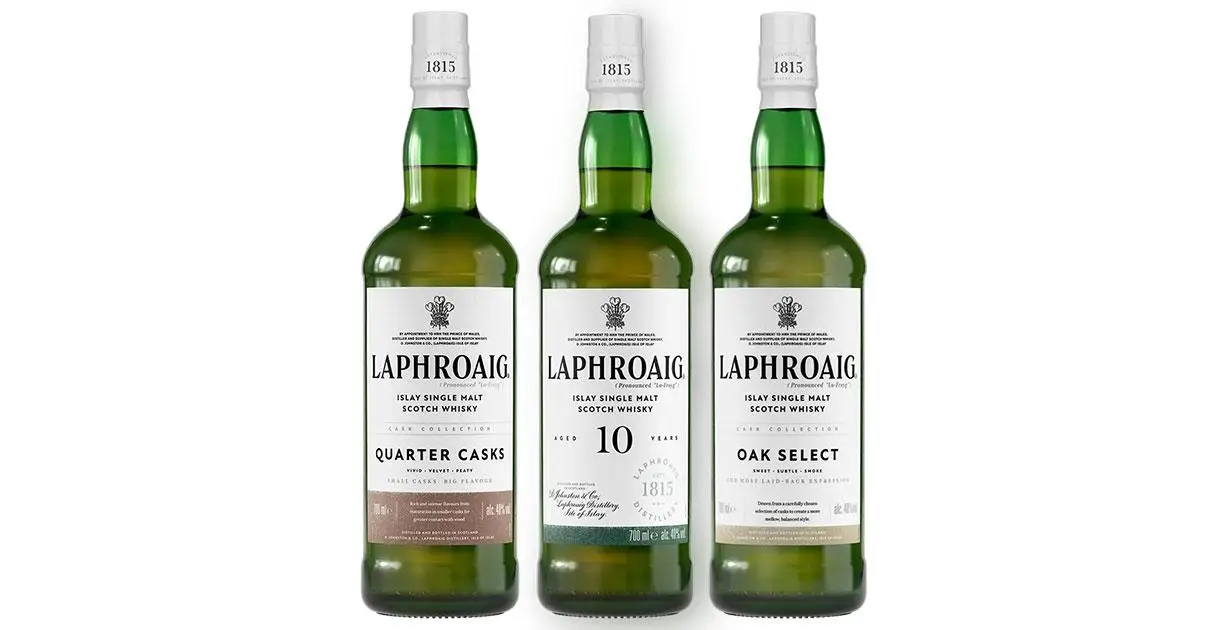
The most famous expression is Laphroaig 10 Year Old. Smoky, briny, and medicinal, it remains a benchmark for peated scotch and one of the best value bottles on the market. A cask strength version is also released each year for those who want the full impact.
Another favorite is Laphroaig Quarter Cask. Matured in smaller barrels, it gains extra oak influence and a creamy texture that softens the smoke. Triple Wood builds on this by adding sherry cask aging, which brings dried fruit and spice. Select is a lighter option that blends several cask types. At the other end of the scale, Lore is a richer no-age-statement release drawn from older stocks.
Limited editions add variety. The annual Càirdeas series, released for the Friends of Laphroaig club, experiments with different cask finishes. Collectors also look for older bottlings such as the discontinued 15 Year Old and 18 Year Old, as well as rare 25- and 30-year-old releases.
For most drinkers, though, the 10 Year Old and Quarter Cask remain the best place to start. They capture the essence of Laphroaig at prices that make them accessible to anyone curious about Islay whisky.
Visiting Laphroaig connects you to whisky, community, and place
Laphroaig is more than a whisky. It is also a community. In 1994, the distillery created the Friends of Laphroaig club. Members are given a lifetime lease on one square foot of land at the distillery. Each year, they can collect their “rent” in whisky, but only by visiting Islay and setting foot on their plot.
The distillery sits just outside Port Ellen, next to Lagavulin and Ardbeg on Islay’s famous south coast. Its whitewashed warehouses, marked with the name in bold black letters, face directly onto the sea. Tours let visitors see traditional floor maltings, peat smoke drifting from the kiln, and rows of casks maturing by the shore. Tasting sessions offer the chance to sample rare releases and even draw whisky straight from the barrel.
For many whisky fans, the trip feels like a pilgrimage. It is a chance to connect not only with a legendary scotch but also with the landscape and culture that shaped it.
Why Laphroaig is worth knowing
From its tricky name to its trailblazing history, Laphroaig stands apart in the world of scotch whisky. Its intense peat smoke and medicinal edge make it one of the most divisive malts ever bottled.
Love it or hate it, Laphroaig is unforgettable. If you want to understand Islay whisky, it is the perfect place to start.