



Each year, Diageo’s whisky makers reduce an inventory of more than 10 million casks to a collection designed to represent the breadth of Scotch whisky. This is how “The Twelve” are found.
There were only 11 casks represented in the room. The discrepancy was intentional. Guests gathered at Royal Lochnagar Distillery had spent a couple of hours exploring the 2026 edition of “The Twelve,” an annual selection from Diageo’s Casks of Distinction program. Yet one whisky remained out of sight.
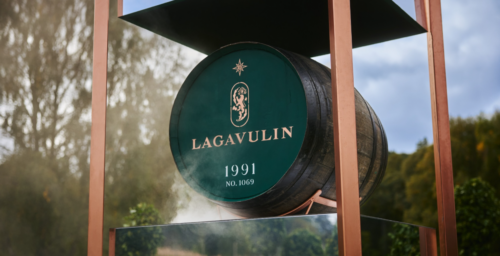
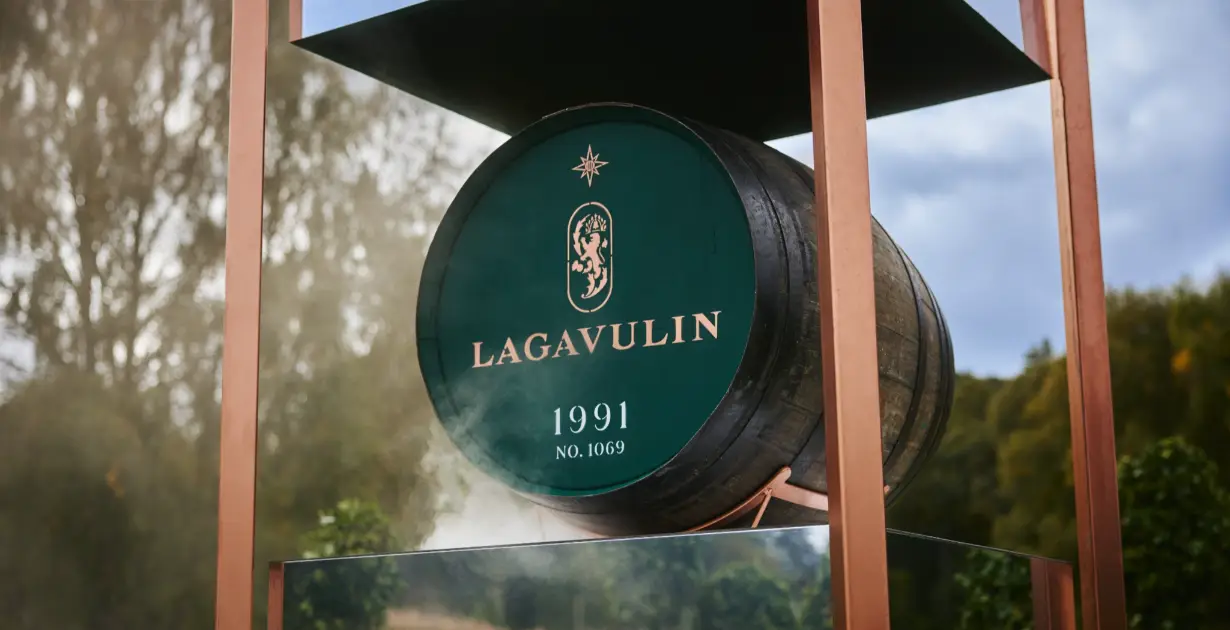
To reveal it, the group was led out of the warehouse and up a nearby hill. The missing cask was Lagavulin 1991 Cask #1069, described by Diageo as the oldest Lagavulin ever offered through Casks of Distinction. It was a theatrical conclusion to a decidedly methodical process.
The Twelve & Diageo’s Casks of Distinction
Diageo holds more than 10 million casks of maturing Scotch whisky. Its whisky makers reportedly devote more than 4,200 hours each year to tasting and assessing candidates for Casks of Distinction, the company’s private whole-cask offering.
 Trending Content


From that enormous and constantly changing inventory, a small number of casks become available through the program. Twelve are then chosen to tell its story for the year.
That distinction is important. The Twelve are not simply the company’s 12 oldest whiskies, nor are they presented as the winners of a numerical ranking. They are a deliberately constructed collection intended to capture differences in region, distillery character, age, wood type and maturation philosophy.
Every Kirkland Bourbon Ranked, From Worst to Best
READ THE STORYThe 2026 selection moves from Blair Athol and Clynelish to Caol Ila, Talisker and Lagavulin. It includes restrained refill casks, assertive Sherry wood and whiskies that have spent close to two decades undergoing secondary maturation.
Together, the casks are intended to show what can happen when spirit, oak and time are managed in markedly different ways. Before they can do that, however, they have to be found.
What Makes The Twelve?
The name creates an obvious question: why these 12?
Speaking at Royal Lochnagar, Diageo representatives emphasized that the annual group should not be viewed as a simple list of the 12 best casks in the company’s warehouses. Every whisky must meet the standard required for Casks of Distinction, but the final selection also needs range.
If all 12 followed the same style: old, heavily sherried, or intensely peated, the collection would communicate very little about the breadth of Diageo’s stocks.
Instead, The Twelve functions almost like an exhibition. Each cask is capable of standing alone, while its place within the wider group helps make the differences between the whiskies visible.
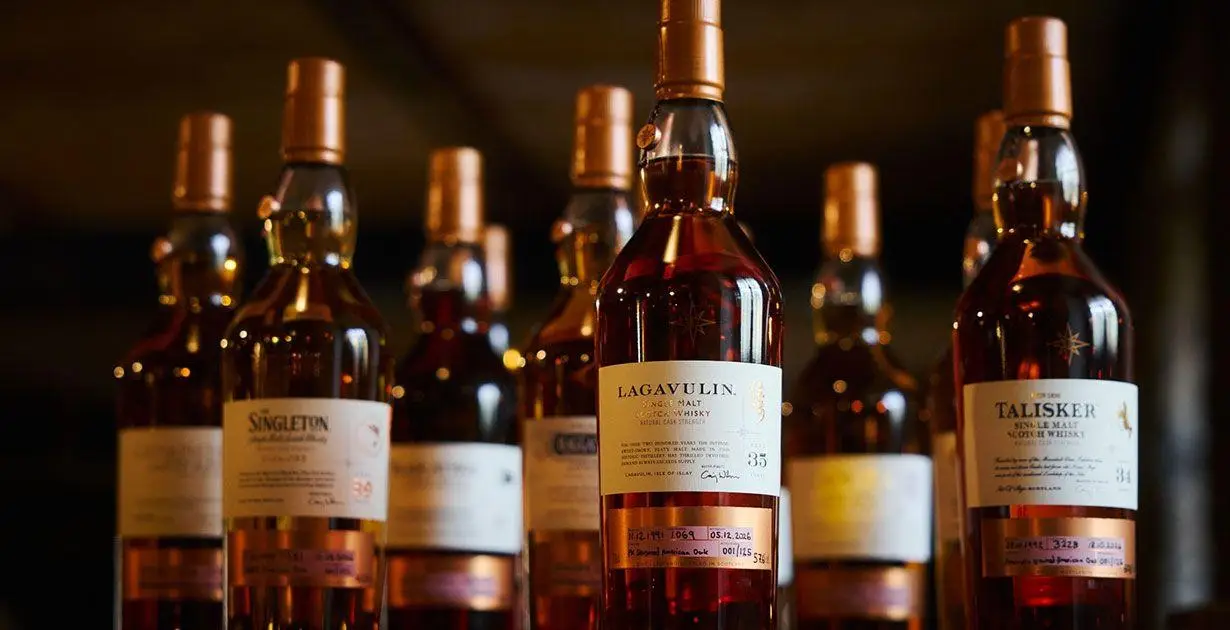
The 2026 collection includes Highland, Speyside, Lowland, Island and Islay distilleries. It spans single malts and single grain, with filling dates running from 1978 to 1997. Its maturation histories range from full-term refill American oak to long periods in PX- or Moscatel-treated finishing casks.
The collection’s oldest member is Talisker 1978 Cask #2824, while Blair Athol 1997 Cask #1491 is among its youngest. Port Dundas represents closed-distillery grain whisky, while two Talisker casks demonstrate what one distillery can produce through different ages and wood regimes.
The objective is contrast without inconsistency. The casks must be individually distinctive but collectively coherent.
Arriving at that group requires the whisky makers to navigate a population of casks almost unimaginably larger than the final 12.
Finding Twelve Among Millions
Diageo’s Scotch inventory is never static. New spirit is continuously filled into casks and moved into warehouses. Elsewhere, mature whisky is withdrawn for blending, single malt releases and bottling. The total changes as production continues across the company’s distilleries and maturation sites.
Digital inventory systems allow whisky makers to search those stocks by factors including distillery, filling date and cask type. Casks can be tagged for future attention, selected for sampling or earmarked for a particular destination.
The records make an inventory of more than 10 million casks navigable. They do not determine which whiskies become part of The Twelve.
Candidates pass through repeated rounds of assessment. The team may begin with a parcel of related casks, draw samples and progressively reduce the field. Some are rejected. Others are judged promising but not yet ready. A few may be moved into different vessels and monitored over subsequent years.
Laboratory techniques provide another layer of information. At Royal Lochnagar, a Diageo representative discussed the use of gas chromatography and high-performance liquid chromatography to analyse whisky’s chemical composition.
Such analysis can identify compounds and indicate whether a liquid sits within specified parameters. It cannot decide whether a whisky is compelling.
The Diageo team recalled occasions when an analytical result suggested that a sample fell within an acceptable range, but a whisky maker remained dissatisfied after nosing it. In those cases, the human judgment prevailed.
A machine can produce data about a whisky. It cannot experience its balance, recognise when a flavour feels out of place or determine whether an old cask still expresses the identity of its distillery.
The reduction of millions of possibilities to The Twelve therefore depends on a combination of technology and sensory memory. One finds and describes the candidates. The other decides what they have become.
A Selection Decades In The Making
None of the oldest casks began with The Twelve in mind.
When Talisker Cask #2824 was filled in 1978, the annual collection did not exist. The same is true of the Caol Ila, Glen Ord and Cragganmore casks filled during the following decade.
Their eventual selection reflects decisions made by multiple generations of whisky makers: which spirit to fill, which cask to use, where to store it, when to sample it and whether to leave it alone or change its direction.
The Royal Lochnagar discussion touched on former Diageo whisky makers including Maureen Robinson and Jim Beveridge, as well as the team now responsible for the company’s blends and single malts. Together, those generations create a form of institutional sensory memory.
Warehouse records preserve a cask’s measurable history. The whisky-making team preserves something less easily entered into a database: how a whisky tasted previously, why it was retained and what its earlier custodians believed it might become.
That continuity matters because age is not a guarantee of quality. Time can bring integration, concentration and complexity, but it can also allow oak to overwhelm the spirit beneath it.
The Twelve must therefore show more than survival. Each old whisky needs to demonstrate why its particular maturation worked.
Talisker 1978: The Value Of Restraint
The oldest cask in the 2026 selection demonstrates what can happen when the wood is asked to act slowly.
Talisker 1978 Cask #2824 spent its maturation in refill American oak. Diageo estimates an outturn of 131 bottles at 49.9% ABV. A first-fill cask would generally contribute flavor more aggressively. Across a maturation approaching five decades, that influence could dominate even a robust, moderately peated spirit. Refill oak gave the Talisker time while helping preserve a connection to the distillery.
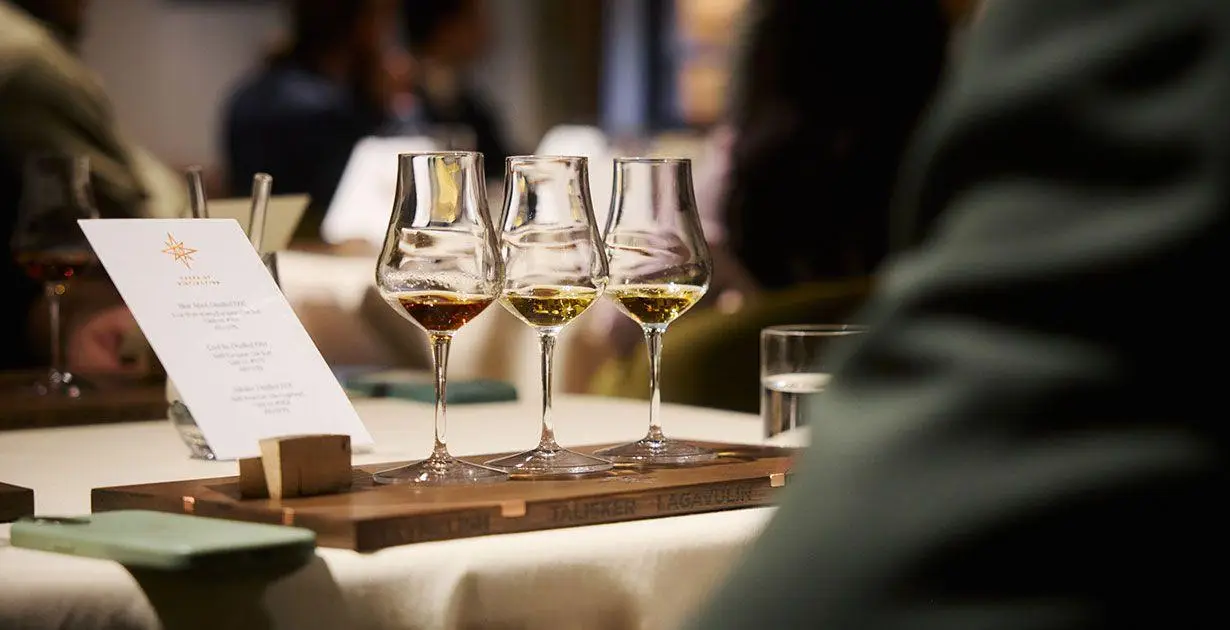
At Royal Lochnagar, the whisky initially appeared unusually restrained. Rather than immediately evoking Talisker’s maritime smoke and pepper, it opened with a creamy texture and aromas compared to vanilla pudding, sabayon and American cream soda.
The smoke arrived later, building at the back of the palate alongside the distillery’s familiar spice.
Returning to the glass after tasting other whiskies made the Talisker appear more expressive. Its inclusion in The Twelve was not about maximum intensity. It was about balance and the gradual emergence of character after almost half a century.
If the Talisker represents restraint, the collection’s final reveal represents intervention.
Lagavulin 1991: The Twelfth Cask
Lagavulin 1991 Cask #1069 began in refill oak before being transferred into a Pedro Ximénez-seasoned American oak hogshead. It subsequently spent close to two decades developing in that second vessel.
Dr. Craig Wilson told guests that his colleague, Dr. Stuart Morrison, regarded it as one of the finest Lagavulin casks he had encountered. Wilson attributed its intensity to an unusual maturation journey that combined Sherry richness with sweetness from American oak.
Diageo describes the whisky as carrying dried fruit, licorice and charred oak alongside Lagavulin’s maritime smoke. The cask is expected to yield approximately 125 bottles at 57.6% ABV.
“This is certainly one of the most special Lagavulin casks I have ever experienced,” Morrison said in the announcement. “The PX maturation has added incredible depth without ever overshadowing the distillery’s character.”
That final qualification explains much of the work behind The Twelve.
A highly active secondary cask can add sweetness, fruit and oak, but more flavor does not automatically mean better whisky. The additions must remain in proportion to the original spirit.
The Lagavulin’s secondary maturation lasted far longer than the period drinkers commonly associate with a cask finish. After close to two decades, the second vessel did not merely add a final accent; it became responsible for a substantial portion of the whisky’s identity.
Linkwood 1993 Cask #13 presents another extended experiment. The whisky was moved into freshly charred American oak in 2006 and has consequently spent about 20 years in a highly active secondary cask. Diageo estimates an outturn of around 180 bottles at 50.4% ABV.
These whiskies demonstrate that selecting The Twelve does not only involve discovering remarkable casks. It may begin years earlier, when a whisky maker decides that a spirit needs a new direction and chooses the vessel capable of providing it. Only time reveals whether that decision was correct.
Twelve Different Answers
Blair Athol 1997 Cask #1491 offers another answer to the same question.
Matured in a first-fill European oak ex-Sherry hogshead, it displayed dark fruit, tannin and spice during the Royal Lochnagar tasting. At 57.1% ABV, it accepted a substantial amount of water.
Dilution did not completely transform the whisky. Instead, it pulled apart its components, allowing individual characteristics to become more clearly defined.
Caol Ila 1984 brought smoke in another form, producing tasting-room comparisons to sweet bacon, candy and soot. The Talisker evolved gradually, while the Lagavulin delivered the force of long PX maturation.
None provided a definitive model for what an exceptional cask should be. Collectively, that was the point.
The Twelve offers 12 different answers shaped by distillery character, wood and decisions taken across decades. Its significance lies less in declaring a winner than in making those differences available for comparison.
Reducing an inventory of more than 10 million casks to this group requires databases, laboratory analysis and thousands of hours of work. Yet the process ultimately concludes in the same way it began at Royal Lochnagar: whisky is drawn from a cask, poured into a glass and assessed by people.
Eleven casks may stand together in a warehouse while the twelfth waits beyond the door. Before any of them arrive there, each must pass a final test no inventory system can complete. Someone has to nose the glass and decide that it belongs.