



The Willett family migrated to Kentucky in 1792, the same year it became a Commonwealth. The first Willett distiller, John David, was born in 1841 and would be head distiller at five Kentucky distilleries during his lifetime. But the task of starting the Willett Distillery in 1936 would fall to grandson Aloysius Lambert Thompson Willett.
This privately owned operation is one of a few Kentucky bourbon distilleries still in the hands of the same family that started it 80 years ago. Beside its brief conversion to ethanol production in the 1970s, it has the distinction of being the only continuously operating brand to start as a beverage alcohol distillery, become a non-distiller producer, and then reopen its own distillery.

Today the Willett Distillery has earned a cult following. Willett whiskey is the subject of many exchanges in online whiskey geek chats, and people from all over the world make the journey to the Willett Distillery as often as they are able. According to Mark, a Willett superfan from Louisville, Ky, who regularly drives the hour from his home to buy new Willett releases, “The WFE line has become extremely limited in availability, and those of us with proximity to the distillery realize how lucky we are.”
What Will Whisky Look Like in 2027? Voices from Whisky Live Paris
READ THE STORYWillett produces six different mash bills, but barrel shortages and time constraints have made it difficult for them to keep up with demand. Britt Chavanne, who works in the family business, says produces about 21 barrels per day, but when operating at full steam, daily output can hit 41 barrels.
This small operation is run mostly by family members, with Britt’s brother, Drew, at the helm. Support staff comes from a handful of employees from outside the family. As growth continues, they each find their roles become more encompassing. Still, time seems to be the greatest challenge facing this family as the distillery experiences exponential growth.
“Time, it isn’t a challenge unique to us,” Chavanne says. “However, there never seem to be enough hours in the day to accomplish everything that needs to get done. And also, you can’t accelerate the aging process.”
 Trending Content




In the meantime, there’s still more demand for Willett whiskey than the distillery can conceivably meet. There is distribution at both the national and international level, but many Willett superfans are left wondering when they will be able to find this coveted whiskey closer to home.

The good news, according to Chavanne, is the distillery will continue to meet consumer expectations in terms of the quality of the product in the bottle.
“We are a boutique operation with limited production,” she begins. “We specialize in small quantities of small-batch and single-barrel offerings. We have been operating with a very strict allocation of all of our products over the last several years, which are currently available in about 35 states or so. Simply put, our emphasis is on quality and not quantity, and we do the very best that we possibly can with our limited operation.”
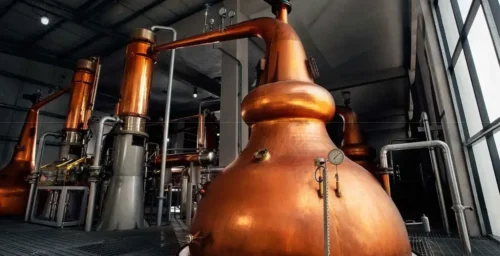
Currently, a lot of new construction is underway on the distillery grounds. The renovation on its main distilling building took more than seven years, and its visitors center is undergoing a massive expansion. A new gristmill named after its popular Noah’s Mill bourbon is nearly finished. That structure is made from reclaimed barn wood and hand-hewn logs reclaimed from a Civil War-era log cabin. A five room bed and breakfast is nearing completion, and ground was been broken for another larger bed and breakfast a few hundred yards away.
The Willett Distillery is preparing for the future of the bourbon industry in a big way, and superfans can’t wait to see what the future holds.
“We are excited to see all of our restoration projects and ongoing construction developments come to fruition,” Chavanne says. “Once complete, we hope to have an unparalleled visitor experience,” says Chavanne.