

In 1881, the Harvey Brothers erected Bruichladdich distillery on the shore of Loch Indaal, which is situated on the westernmost part of the Rinns of Islay. This original building was constructed from stone salvaged right from the sea shore.
These days, Bruichladdich is no longer a quaint rustic distillery, owned, as it is by the likes of Remy Cointreau, but its whisky includes some of the most varied and exotic releases from Islay.
Adam Hannett assumed the helm at Bruichladdich in 2015, after having spent a decade working there. Black Art 5, his first edition, allowed him to dazzle the world with his wizardry as head distiller.
I feel a bit bad for Hannett that most of the press asserts the recipe for Black Art 5.1 was passed by Jim McEwan, like a torch in the night. This almost seems to heap more praise onto McEwan’s shoulders, rather than onto Hannett’s…but I guess that’s how “The Craft” is practiced, with some degree of deference for retired Head Warlocks. Winning!
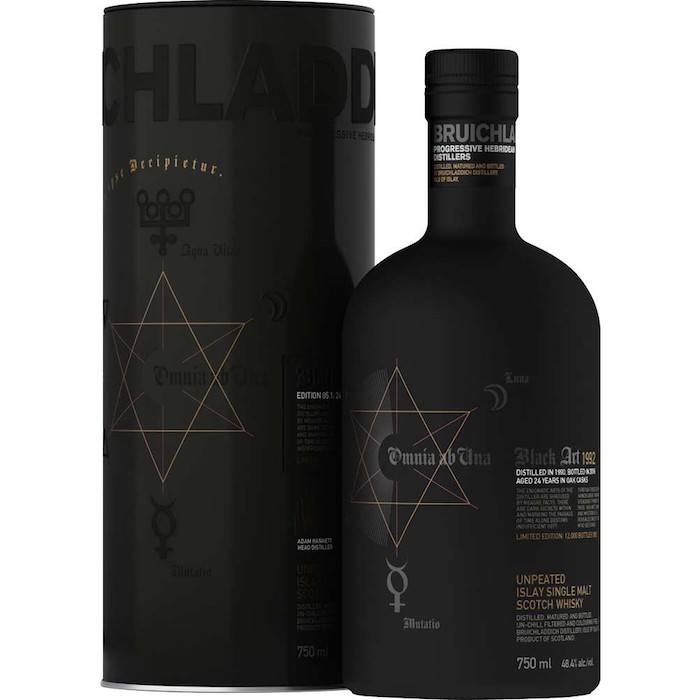
As for the recipe of 05.1, Bruichladdich has disclosed that the youngest whisky in the rather large batch is from 1992, making it 24 years old. Aside from this one detail, Hannett shut his recipe book tightly, much to the chagrin of the public’s prying eyes. Could there be older treasures in the rather arcane black bottle, adorned with a hexagram?
Oh yeah, I think so, judging by the nose, palate, and finish…but I’m getting ahead of myself. Suffice it to say, Black Art 5.1 runs the gamut through many different cask types, if I am not very much mistaken. This whisky was released this spring.
Tasting Notes
Vital Stats: 70 cl; 48.4% ABV / 96.8 proof; 12,000 bottles produced; bottled in 2016; unpeated; American oak and premium wine casks; retails for $290-ish in England, $350-ish in the USA.
Appearance: Burnished cherry wood; Exquisite beading, and supermodel legs. I heretofore dub them Karlie Kloss material.
 Trending Stories



Nose: One of the better noses I’ve sniffy-sniff-sniffed in a long while. It’s dark, all right. Betwitching, and complex. Double-double, toil and trouble…baby coconut jelly mingles smoothly with the essence of dried fruits like fig, date, and apricot. But there’s more…desiccated fruits resurrect themselves as living spirits, freshly plucked in a blanket of dew, from tree or bush.
Plum, orange, raspberry, and champagne grape can be detected. In addition, Herbes de Provence, vanilla bean, oak ester, dark chocolate, and brown sugar rear their pretty heads. Let me catch my breath. Wow. Just fantastic. These non-fruit scents all hang back patiently, like supporting actors, to make the 5.1 a virtuoso performance.
Palate: I’m initially reminded of the old Black Box, higher ABV Highland Park 25 Year Old, which I dearly miss. But this whisky before me is even more rough. Black Art, how do I love thee? Let me count the ways: 1. Delightfully bitter oak tannin from European “premium” wine casks. 2. fruity confection of delight (peach, nectarine, Manila mango, lemon zest). 3. Sappy-sweet American oak. 4. Island heath honeycomb. 5. Marshmallow nougat. 6. Baker’s coconut. 7. Grass sap (in a good way). 8. Clover blossom.
As with the Highland Park 25, this baby lingers on and on and on. Honey duels with the slightly bitter oak, along with a tantalizing marshmallowy nougat, which clings to the back of the tongue, ultimately outlasting the rest. Yes, the label on my sample bottle says the oak used in this release is primarily American, but I taste European casks thrown into the mix, as well. In fact, both kinds of wood complement each other quite nicely.

 Latest News