

What exactly is a “craft whiskey” distillery or spirit? Or substitute “artisanal” for the word “craft”? The answer to the question most likely depends upon whom you posed that question to. Consumers, distillers and retailers may very well reveal a plethora of answers. With no regulated definition, it becomes subject to one’s own interpretation and definition. The same holds true for a distillery who carries those taglines. Let’s look at a few definitions from a couple of organizations;
The American Craft Spirits Association defines a craft distillery as follows:
- A distillery who values the importance of transparency in distilling, and remains forthcoming regarding their use of ingredients, their distilling location and process, bottling location and process, and aging process.
- A distillery that produces fewer than 750,000 gallons annually.
- A distillery that is independently owned and operated, with more than a 75% equity stake in their company and operational control.
The American Distilling Institute provides us with this:
Craft Distilled Spirit:
The products of an independently-owned distillery with maximum annual sales of 100,000 proof gallons where the product is PHYSICALLY distilled and bottled on-site.
The Kentucky Distillers’ Association, the trade group responsible for most of the Kentucky bourbon that is produced, has its own craft level membership for distilleries, stating that one “maintain an inventory below 10,000 barrels (or barrel equivalent) of distilled beverage spirits each year.”
What they all have in common is a numerically defined production limitation, which I feel is an attempt to limit the big distillers from using that term. One looks for transparency, and another clearly defines where the production takes place. I cannot help but feel that if they combined their definitions we would be onto something.
Personally, I do not think the size of the distillery should have anything to do with the use of the words craft or artisanal, and that the word “craft” gets used loosely whether attached to “distillery” or “spirit,” and that there should be a universally defined definition. Shouldn’t a “craft” spirit be more than just a production or volume number?
 Trending Stories
When recently asked what the tag craft or artisan distiller meant to him, Alan Bishop, master distiller with the Spirits of French Lick, had this to say, “The problem with the words craft or artisan in the distilling world is that they have no definition. We all inherently know what the words connote, particularly in other industries, and this is what makes distillers who stretch the truth or flat out lie so troubling.
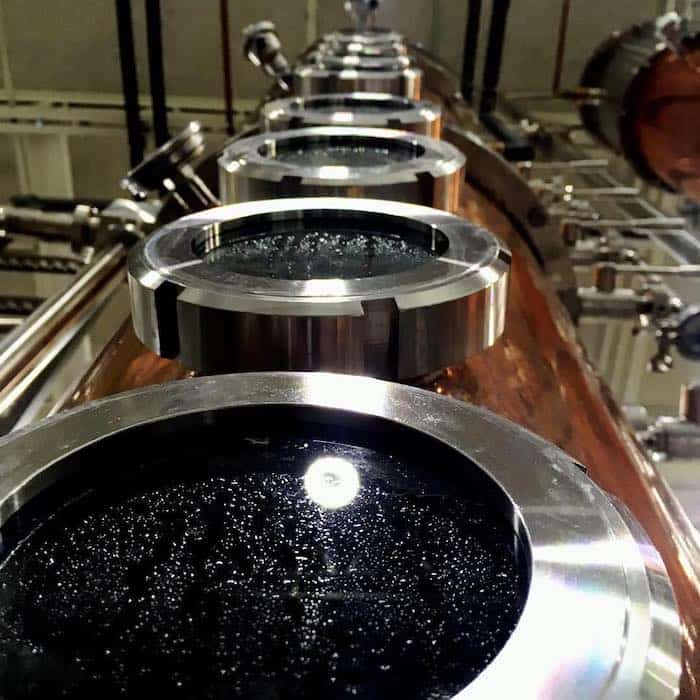
“The art is defined by dedication and involvement in every stage from fermentation and distillation, maturation, blending skills, and bottling. The issue is that the worst offenders are often in charge of the best marketing teams and they understand ‘craft rectifier’ doesn’t sound near as sexy as ‘craft distiller.'”
Consider the product list from Bishop’s distillery in Indiana, who’s only rule is “Respect the Grain.” In addition to the standard bourbon, rye, gin and vodka that seems to be the norm, they also have a phenomenal aquavit that took Double Gold in Denver this year, a maple syrup barrel rested aquavit, blackberry eau-de-vie, which is an unaged brandy, and a Catawba grape brandy, among other offbeat offerings.
And there’s no telling what else this distillery may have cooking in the wings. This type of diversity is what comes to my mind when I hear “craft” or “artisanal” spirits or distillery, and is a testament to the master distiller’s expertise, skill, craftsmanship, thinking outside the box, and straying from the norm, while still respecting tradition and history.
And while I understand that not every owner will allow the freedom and creativity, or hands-on approach that the owners of this distillery do, I feel that too many of these distilleries lack that diversity and creativity to call themselves “craft” or “artisanal,” and the industry can use a well thought out definition that is not left open to interpretation, and represents more than just a production number.
So I’m asking readers to think about their own definitions of “craft” or “artisanal” whiskey distillery or spirit, and if the industry would not benefit from a universally defined one.


 Latest News