


First Buffalo Trace Estate Bourbon Now Lays in Barrel

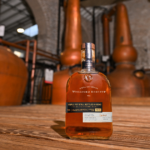
Buffalo Trace estate bourbon, the result of distillation of a corn crop grown on distillery grounds last year, is now in barrel for release down the line.
Follow The Whiskey Wash on Google News

Follow The Whiskey Wash on Google News to get our latest reviews and guides delivered straight to your feed.

Like Conversation
reading time
Despite its successful mainstream whiskies, Buffalo Trace still retains a certain old-school charm. It’s in this vein that, a little over a year ago, it put down a corn crop on the grounds of some newly acquired acreage with the goal of producing a very small batch estate bourbon. A new update indicates the first results of that crop are now in barrel aging, with more on the way.
The distillery, in its update, said its first batch of estate bourbon is distilled from an heirloom corn strain that dates back to 1876, around the time the legendary E.H. Taylor was leaving his mark at Buffalo Trace. The strain “originated from a White Mastodon variety and through selection techniques in isolation it became ‘Boone County White,’ after a farmer named James Riley coined the name.”
Buffalo Trace estate bourbon
Buffalo Trace estate white corn going into the cooker. (image via Buffalo Trace)

The non-GMO white corn, after being planted last summer, was monitored by Buffalo Trace master distiller Harlen Wheatley and his staff until that August, when the corn stalks were well over 12 feet tall. The corn was then harvested and dried. The corn was afterwards fermented and distilled at the end of this past May, resulting in what’s said to be 117 barrels of the Boone County White Corn variety now aging in warehouses for the next few years until they are ready to be bottled and released.

Now, should you think this was a one-off project, Buffalo Trace has just gone ahead and planted its second crop of non-GMO corn, a variety known as Japonica Striped Corn. It is:

[A] strain originally from Japan and dating back to the 1890s. This variety will have variegated leaves of green, white, yellow and pink stripes with dark purple tassels and burgundy kernels. Typically used as an ornamental corn, this variety will be a true experiment to see how it tastes once fermented and distilled next year!  In addition to both the Boone County and Japonica Striped corn being from E. H. Taylor, Jr.’s era, both are dent corn varieties, which have a high starch content and are ideal for distilling, unlike traditional sweet corn one might see in the grocery store.  Buffalo Trace uses a different variety of dent corn in the distillation of the rest of the bourbons in its portfolio.

Ongoing plans, in fact, call for planting “a different variety of corn each year at its farm, so each year in the future there will be a unique release.”

Quick whisky question

Single malt is everywhere, but what does it mean? We want to know what the word “single” means to you. Three quick questions, under a minute.

Which stages must take place at the same distillery for a whisky to be called “single malt”?

Tick as many as you like

or

Must the barley in a single malt be grown in the same country the whisky is made in?

How would you describe your whisky knowledge?

Nino Kilgore-Marchetti

Nino Kilgore-Marchetti is the founder of The Whiskey Wash, an award-winning whiskey lifestyle website dedicated to informing and entertaining consumers about whisk(e)y globally. As a whisk(e)y journalist, expert, and judge, he has written extensively about the subject, been interviewed in various media outlets, and provided tasting input on many whiskeys at competitions.

All Posts